




Every sawmill, woodworking shop, and furniture factory shares a common byproduct. It accumulates under saws, around planers, and in collection bins. It’s dusty, bulky, and a constant nuisance to manage. Some operations burn it in inefficient boilers. Others pay to have it hauled away. And in many cases, it simply piles up in corners, creating fire hazards and taking up valuable space.
That material is sawdust—millions of tons of it produced annually across the globe. For most wood processors, it’s a disposal problem with real costs attached. But there’s a different way to look at it. Sawdust is essentially wood that’s already been reduced to small particles. It contains the same energy as the lumber it came from, just in a less convenient form. With the right processing, that inconvenience becomes a clean, dense, and marketable product.
What’s in Sawdust?
Sawdust is composed of the same components as solid wood. It contains cellulose, hemicellulose, and lignin—the structural polymers that make up plant cell walls. The cellulose and hemicellulose provide the energy content, while the lignin acts as a natural binder when heated. This lignin is what makes wood pellet production possible without adding artificial binders.
The energy content of sawdust varies by species. Hardwoods generally have a higher calorific value than softwoods, but both fall within a range of roughly 17 to 19 megajoules per kilogram on a dry basis. This is comparable to the energy content of coal, making wood pellets a viable alternative fuel.
Moisture content is a critical factor. Fresh sawdust from green lumber can have moisture content of 40% to 60%. For pellet production, this needs to be reduced to 10% to 12%. The drying process is one of the most energy-intensive steps in pellet production, but it’s essential for achieving durable, high-quality pellets.
Particle size matters too. Sawdust from different machines varies in particle size. A planer produces larger shavings, while a sander produces fine dust. For consistent pellet quality, the material must be ground to a uniform particle size, typically 3 to 5 millimeters.
Why Process Sawdust?
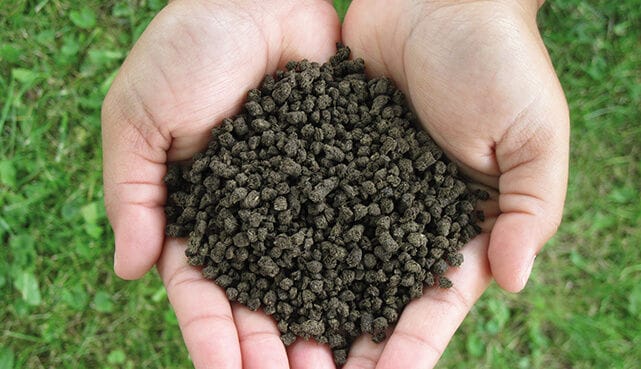
Processing sawdust into pellets addresses several challenges at once. The most obvious is the reduction in volume. Loose sawdust is bulky. A given volume of sawdust contains only a fraction of the material of the same volume of pellets. Compressing sawdust into pellets reduces the volume by roughly 70% to 80%, making it far more economical to store and transport.
The pellets are also easier to handle. They flow like grain, can be stored in bins or silos, and can be transported in standard bulk trucks. This ease of handling makes them attractive to customers who would never consider using loose sawdust.
The combustion characteristics improve dramatically. Pelleted sawdust burns efficiently and cleanly. The uniform size and density allow for controlled combustion in automated boilers. The moisture content is low, so energy isn’t wasted evaporating water. The combustion produces minimal ash compared to raw sawdust.
Finally, there’s the market value. Wood pellets are a globally traded commodity. They’re used in residential heating, industrial boilers, and even power generation. The market is well-established and growing, with prices that reflect the energy content of the pellets.
The Processing Steps
Turning sawdust into pellets involves a sequence of processing steps. Each step must be carefully managed to achieve consistent product quality.
The first step is drying. Most sawdust contains too much moisture for effective pelletizing. A rotary drum dryer is the most common equipment for this step. The sawdust is fed into the dryer, where it’s exposed to hot air. The dried material emerges at the desired moisture content of 10% to 12%.
The dried sawdust is then ground to a uniform particle size. A hammer mill reduces the material to particles of roughly 3 to 5 millimeters. This grinding step is important because it ensures consistent flow through the pellet mill and uniform pellet quality. The hammer mill also breaks up any lumps that may have formed during drying.
Next comes conditioning. The ground material is treated with steam to soften the fibers and activate the natural lignin. The moisture content may be adjusted slightly at this stage. Conditioning is critical for achieving durable pellets that hold together during handling and transport.
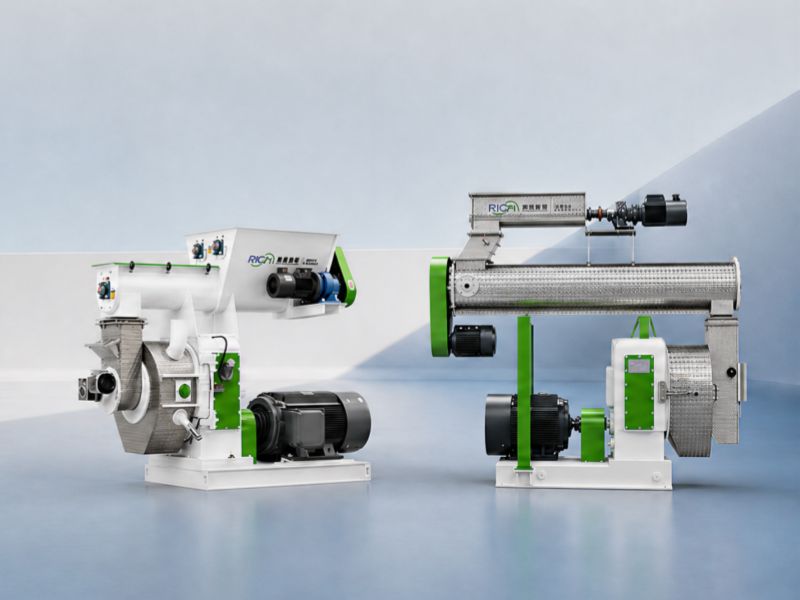
The actual pelletizing happens in a sawdust pellet machine. The conditioned material is fed into a die chamber, where rotating rollers press it through the die holes. The friction generates heat, which melts the lignin and binds the particles together. The pellets emerge as continuous rods, which are cut to length by knives.
The hot pellets are then cooled. A cooler reduces the temperature and moisture content to stable levels. The final moisture content is typically 8% to 10%. The cooled pellets are screened to remove fines, which are returned to the process. The finished pellets are then ready for packaging or bulk storage.
Equipment Scale and Configuration
The scale of the equipment determines the scale of the operation. Small machines, capable of producing a few hundred kilograms per hour, are suitable for smaller woodworking shops or farms. These machines are compact, affordable, and can be operated by a single person.
For larger operations, the scale increases accordingly. A complete wood pellet production line integrates all of the processing steps into a coordinated system. The line includes the dryer, hammer mill, conditioner, pellet mill, cooler, and screening equipment. Material handling equipment—conveyors, elevators, and bins—moves the product through the various stages.
The pellet mill itself must be robust. Wood is abrasive, and sawdust contains silica that can cause wear. The die and rollers must be made from wear-resistant alloys. The bearings must be sealed against dust. And the motor must provide sufficient power for the compression process.
Quality Considerations
The quality of wood pellets is determined by several factors. The durability of the pellets—their resistance to breakage during handling and transport—is a key quality metric. Durability of 95% or higher is desirable. Factors that affect durability include particle size, conditioning, and die configuration.
The moisture content affects both durability and combustion performance. Pellets that are too wet will degrade in storage and burn inefficiently. Pellets that are too dry may generate excessive dust. The target moisture content is typically 8% to 10% for finished pellets.
The ash content is determined primarily by the wood species and the presence of bark. Hardwoods generally have lower ash content than softwoods. Some markets require ash content below 1%, which means using clean, bark-free sawdust.
Market for Wood Pellets
The market for wood pellets is diverse and well-established. The residential heating market is the largest consumer in many regions, with homeowners using pellets in stoves and boilers. This market values consistency, low ash content, and good durability.
The industrial market is growing. Power plants and heating plants use wood pellets as a renewable fuel. These buyers typically purchase in large quantities and value consistent quality and reliable supply.
The international trade in wood pellets is substantial. Europe is the largest consumer, with imports from North America and other regions. The transport of pellets is economical because of their density—a shipment of pellets contains far more energy than the same volume of sawdust.
The Technology and Its Evolution
Modern pellet production technology has evolved significantly. The basic principles are the same, but the equipment has become more efficient and more automated. Control systems monitor temperature, moisture, and pressure, adjusting parameters automatically to maintain consistent quality.
Advanced conditioning systems improve pellet durability. Wear-resistant materials extend the life of dies and rollers. And energy recovery systems reduce the overall energy consumption of the production line.
The sawdust pellet machine itself has become a mature technology, with a range of models available to suit different scales of operation. The core function—compressing wood fibers into dense pellets—remains the same, but the precision and reliability of the equipment have improved substantially.
The Role of the Manufacturer
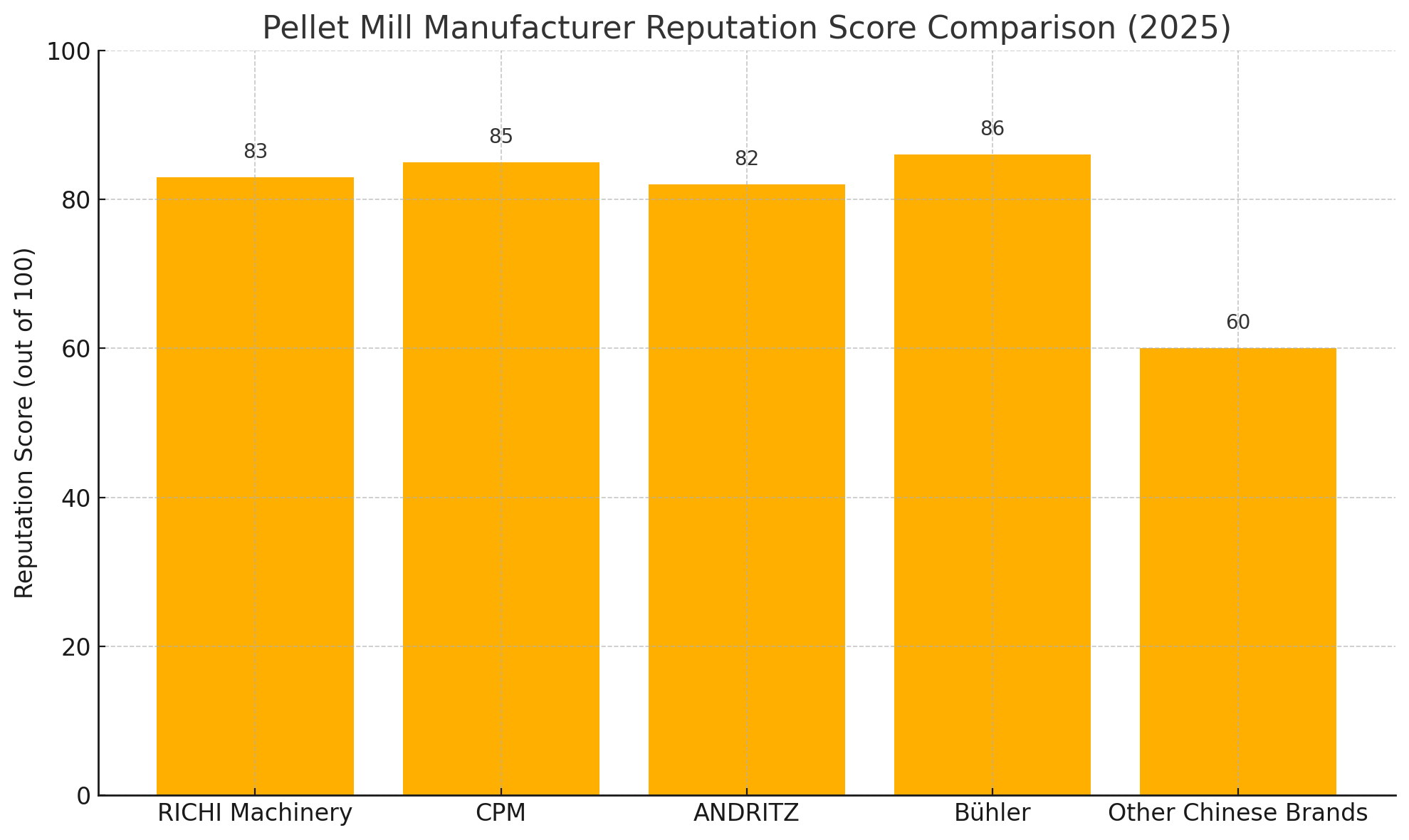
The quality of the equipment directly affects the success of the operation. A Richi Pellet Mill is a specialized piece of equipment for wood processing, designed to handle the demanding conditions of sawdust pelletizing. Robust construction, wear-resistant components, and reliable control systems are essential for consistent production.
The manufacturer’s experience matters too. Wood pellet production has its own set of challenges. The same die configuration that works for one species may not work for another. The conditioning requirements vary with moisture content and particle size. An experienced manufacturer can provide guidance on these factors.