
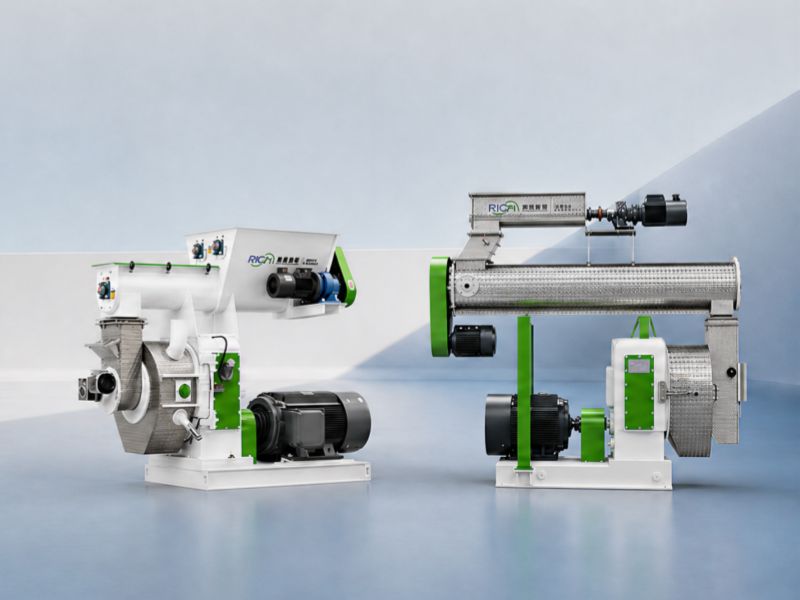
The Machine That Makes the Pellet Is Not the Whole Process
When people discuss pelletized cat litter, attention naturally goes to the pellet mill.
That makes sense: the pelletizing machine is the stage where loose material becomes a defined pellet.
But pellet quality is often determined long before the material reaches the die.
Raw-material size, moisture, formulation and mixing all influence how the material behaves during compression. After pelletizing, drying, cooling and screening determine whether the newly formed pellets are stable enough for storage and packaging.
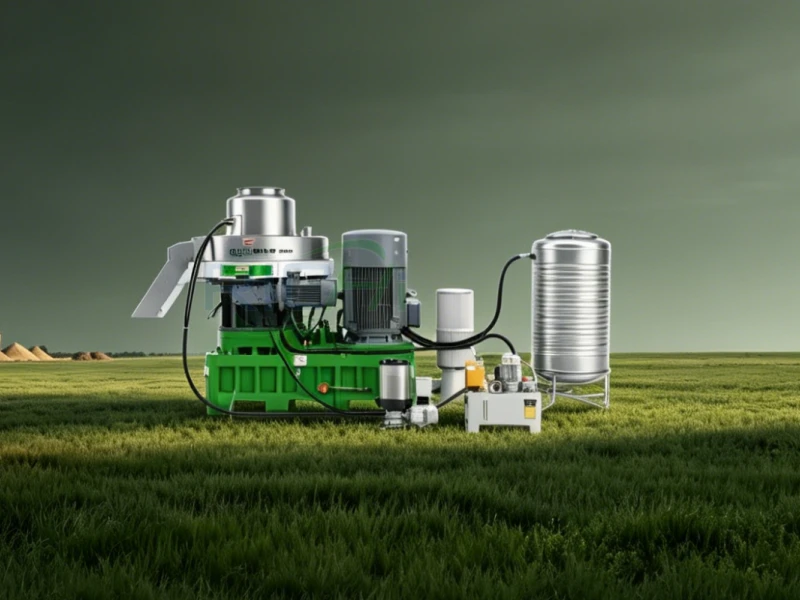
For this reason, a Cat Litter Pellet Mill should be viewed as one component of a complete processing chain rather than an isolated machine.
Moisture Is a Process Variable
Imagine two batches of sawdust that look almost identical.
One batch has relatively low moisture.
The other contains significantly more water.
They may behave very differently during pelletizing.
Excess moisture can influence compression behavior, throughput and pellet stability. Insufficient moisture can also create processing difficulties depending on the raw material.
This is why moisture measurement should be part of routine production management.
Instead of asking only:
“Is the material dry?”
the production team should ask:
“What is the actual moisture level, and is it appropriate for this specific process?”
Why Drying Capacity Must Match Pelletizing Capacity
Consider a factory with a pelletizing capacity of 3 tons per hour.
If the material requires substantial drying before pelletizing, the dryer must be capable of preparing enough material for the pelletizing section.
Otherwise, the pellet mill may repeatedly wait for prepared material.
The same problem can occur after pelletizing if freshly formed pellets require drying.
In both cases, the bottleneck affects the entire production line.
Therefore, equipment should be balanced according to material flow rather than selected independently.
Different Drying Technologies Serve Different Needs
There is no single dryer that is automatically suitable for every cat litter material.
Potential technologies can include:
- Belt dryers
- Drum dryers
- Other continuous drying systems
- Specialized low-temperature systems
A belt dryer may be attractive when the product needs controlled residence time and gradual drying across multiple layers.
A drum dryer may be suitable for other materials and production conditions.
The right choice depends on:
- Initial moisture
- Target moisture
- Material density
- Particle size
- Heat sensitivity
- Required throughput
- Available energy source
- Factory layout
Therefore, the phrase “industrial dryer” alone does not provide enough information to determine whether a machine is suitable.
Why Plant-Based Cat Litter Needs Careful Drying
Plant-based cat litter can contain materials with different densities and moisture levels.
Tofu fiber, wood fiber, paper fiber and agricultural residues do not necessarily behave the same way.
Some materials can become fragile if dried too aggressively.
Others may require more intensive moisture removal.
The objective is not simply to make the product as dry as possible.
Instead, the goal is to reach the moisture specification required for:
- Product stability
- Storage
- Packaging
- Transportation
- Consumer use
This distinction is important when designing the drying process.
A Practical Process Example
Consider a plant producing wood-based cat litter.
The production sequence might look like this:
Wood residues → crushing → moisture adjustment → pelletizing → drying → cooling → screening → packaging
If the incoming sawdust is already sufficiently dry, the front-end dryer may be unnecessary.
If the freshly formed pellets contain excessive moisture, a post-pelletizing dryer may be required.
Another factory might use:
Wood chips → hammer mill → dryer → storage → pelletizing → cooling → screening → packaging
The process depends on the starting condition of the raw material.
There is no universal flow chart that fits every factory.
What Happens Inside the Pelletizing Stage?
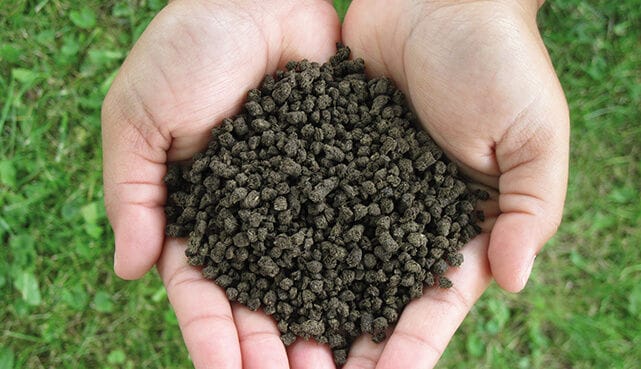
During pelletizing, prepared material enters the compression area.
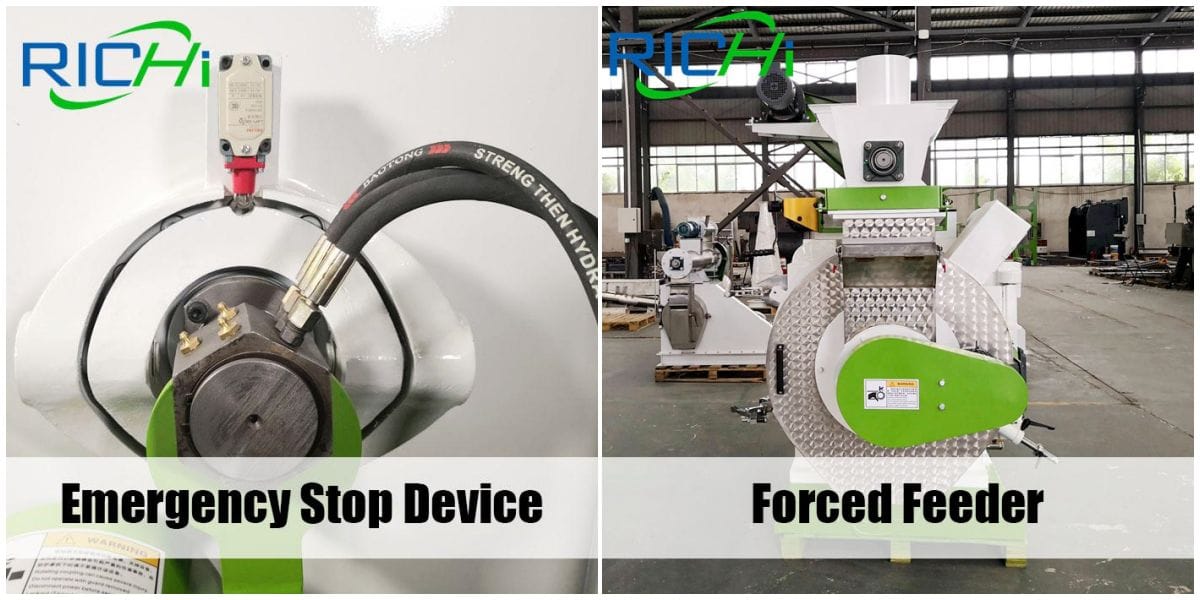
In a ring-die system, rollers press material through die holes. Pressure and friction help form compact pellets.
The die specification affects pellet diameter and production behavior.
(Related Post:https://www.richipelletmill.com/cat-litter-pellet-machine/)
For commercial cat litter, pellet dimensions can be selected according to the intended product.
However, pellet diameter alone does not define quality.
A manufacturer should also evaluate:
- Density
- Durability
- Surface condition
- Dust generation
- Moisture
- Absorption
A good production system balances these characteristics rather than maximizing only one.
Why Cooling Comes After Drying
Fresh pellets can be warm after compression and drying.
If hot material goes directly into packaging, the internal temperature and moisture can affect storage behavior.
Cooling provides a controlled transition between production and packaging.
A properly designed cooling stage can help stabilize the product and prepare it for screening.
This is particularly important for continuous industrial production.
Screening Creates a More Consistent Product
Imagine opening a bag and finding a mixture of powder, very short fragments and correctly sized pellets.
Even if the total weight is correct, the product may not meet the manufacturer’s intended quality standard.
Screening helps control this variation.
The screen can separate:
- Qualified pellets
- Fines
- Broken particles
- Oversized material
The exact screening arrangement depends on product specifications.
For factories selling different pellet sizes, screening can become even more important because product fractions may need to be separated more precisely.
What Does a Dryer Have to Do With Dust?
Dust is not caused by one machine alone.
It can be influenced by:
- Raw-material properties
- Grinding
- Pellet strength
- Drying conditions
- Cooling
- Screening
- Material transfer
If pellets are excessively fragile, more fines may be generated during conveying and packaging.
This means dust control should be considered throughout the process.
A complete system may include appropriate dust collection and enclosed material transfer where required.
Why Businesses Should Test Before Buying
A machine specification sheet can provide useful information, but it cannot fully describe how every raw material will behave.
Testing the actual material can answer practical questions:
- Can the material be pelletized?
- What moisture range works?
- What pellet diameter is suitable?
- How much drying is required?
- How much dust is generated?
- What capacity can realistically be achieved?
This information can then be used to design the production line.
A company that skips testing may end up selecting equipment based on a theoretical capacity that does not match its actual raw material.
What Does an Industrial Dryer Need to Be Sized For?
Dryer sizing should be based on water evaporation, not simply finished product capacity.
For example, two factories may both produce 2 tons per hour of cat litter.
Factory A starts with relatively dry sawdust.
Factory B starts with much wetter material.
Their dryer requirements can therefore be very different.
This is why an industrial wood pellet machine for sale listing should not be used as a direct substitute for a project-specific drying calculation.
The equipment may be technically capable of processing wood materials, but the actual dryer selection should consider the complete process and target product.
Integrating Drying Into the Plant Layout
Drying equipment also affects factory design.
The project should consider:
- Raw-material storage
- Heat-source location
- Dryer footprint
- Conveyor routes
- Dust collection
- Finished-product storage
- Maintenance access
Poor material flow can create unnecessary conveying distances and additional energy consumption.
A well-designed plant aims to move material through the process with as few unnecessary transfers as possible.
The Bigger Lesson
Pelletizing and drying should not be considered separate purchasing decisions.
They are connected by material moisture, production capacity and final product requirements.
When a manufacturer defines the complete process first, it becomes easier to determine:
- Which raw-material preparation equipment is needed
- Whether drying is necessary
- Which drying technology is appropriate
- What pelletizing capacity is required
- How cooling and screening should be configured
- What packaging system is suitable
Businesses comparing production technologies can from this source gather additional background before finalizing a plant design.
A reliable cat litter production strategy begins with process engineering—not with a machine catalog.