
If you have been shopping for a fertilizer granulator, you have probably noticed something frustrating. The quotes you get back from different suppliers do not look like they are talking about the same machine. One quote is a few thousand dollars. Another is tens of thousands. A third is higher still. They all describe equipment that makes granules. So why are the numbers so far apart?
The answer is that “granulator” covers a wide range of machines that do different things at different scales. A small disc granulator for a farm workshop is not the same as a heavy-duty rotary drum granulator feeding a commercial production line. Both make granules. But they are built for different volumes, different materials, and different levels of automation. Understanding what drives the price helps you compare quotes fairly and avoid buying the wrong machine for your situation.
Granulation Is Not a Single Process
Before you can compare prices, you need to know which type of granulator you are actually looking at. The main types used in organic and compound fertilizer production are disc granulators, rotary drum granulators, and extrusion granulators.
Disc granulators use a rotating disc to tumble material into round granules. They are simple, affordable, and well suited to small and medium operations. A disc granulator might cost a few thousand dollars for a small unit. It is a common starting point for farms that want to make their own fertilizer.
Rotary drum granulators use a long, rotating cylinder. They can handle higher volumes and are often used in larger production lines. They tend to cost more because of the size, the drive system, and the supporting equipment required.
Extrusion granulators, sometimes called dry granulators, press material through a die or between rollers to form granules without adding much moisture. They are used when the material is sensitive to heat or when a denser product is desired. The price varies with capacity and configuration.
So when you ask about the fertilizer granulator machine price, the first question is not “how much” but “which type.” A quote for a disc granulator and a quote for a rotary drum granulator are not comparable. They do different jobs at different scales.
What Actually Drives the Cost
Once you know the type, several factors determine the price. The most obvious is capacity. A machine that produces one ton per hour costs less than one that produces ten tons per hour. The larger machine needs a bigger motor, a heavier frame, and more robust bearings. The price scales with throughput, though not always in a straight line.
Build quality matters. A granulator made from standard steel with thin walls will cost less than one made from thicker steel with wear-resistant liners. The cheaper machine may work fine for light use. But if it runs continuously on abrasive material, it will wear out quickly. The cost of replacing worn parts and the downtime from breakdowns can exceed the initial savings.
The drive system affects the price. A machine with a reliable gearbox and a properly sized motor costs more than one with a light-duty drive. But a properly sized drive runs cooler, lasts longer, and uses less energy per ton. Over time, the more expensive drive is often the cheaper option.
Automation adds to the cost. A fully manual granulator requires an operator to monitor and adjust the process constantly. A machine with sensors and automatic controls reduces labor and improves consistency. For small operations, manual control may be sufficient. For commercial plants, automation is usually worth the investment.
Supporting equipment also affects the total price. A granulator rarely works alone. It needs a feeder, a binder system, a dryer, a cooler, and a screener. Some suppliers quote the granulator alone. Others quote a complete line. When comparing prices, make sure you are comparing the same scope.
The Difference Between a Granulator and a pellet plant
It is easy to confuse granulation with pelleting because both turn fine material into larger, uniform particles. But they are different processes, and they serve different markets.
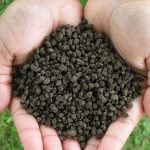
Pelleting forces material through a die under high pressure. The result is a dense, cylindrical pellet with a smooth surface. Pellets are strong, uniform, and slow to break down. They are often used for fuel, animal feed, or slow-release fertilizer.
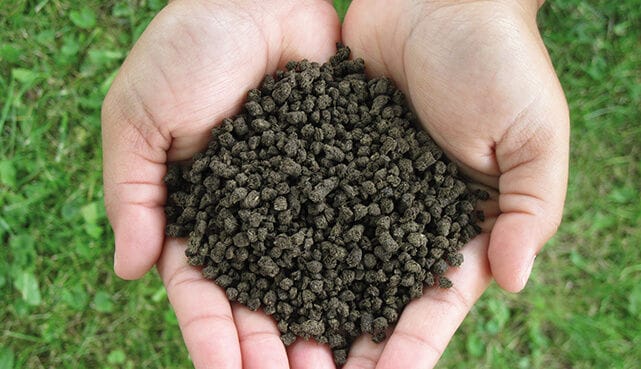
Granulation builds particles by tumbling them with moisture and binders. The result is a rounder, more porous granule. Granules break down faster in soil and blend more easily with other inputs. They are often preferred for organic fertilizer and compound fertilizer blends.
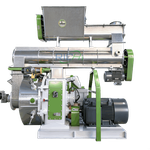
Many producers invest in both. A pellet plant can produce pellets for one market while a granulation line serves another. But the equipment is not interchangeable. A pellet mill cannot make granules, and a granulator cannot make pellets. If you need both products, you need both processes.
This matters for pricing because a pellet plant and a granulation line have different cost structures. Pellet mills tend to cost more per ton of capacity because of the high pressure and the wear on dies and rollers. Granulators tend to cost less to operate because they run at lower pressure and use less energy. The right choice depends on your material and your market.
What to Consider Before You Buy
Price is important, but it is not the only factor. Before you commit to a machine, consider the material you will be processing. Organic fertilizer made from manure, compost, or crop residues behaves differently from mineral fertilizers or chemical blends. The granulator must be matched to the material.
Consider the moisture content of your raw material. Granulation requires the right moisture level. If the material is too dry, it will not form granules. If it is too wet, it will clump and clog. You may need a dryer or a moisture control system as part of the line.
Consider the binder. Some materials granulate easily on their own. Others need a binder such as starch, clay, or molasses. The binder system adds to the cost and complexity of the line.
Consider the final product. What size granules do you need? What durability? What nutrient content? These specifications determine the equipment configuration.
Consider the scale. A small farm may need only a few hundred tons per year. A commercial plant may need tens of thousands. The equipment must match the volume. Oversizing wastes capital. Undersizing limits growth.
Why Support Matters as Much as Price
The cheapest machine is not always the best value. A machine that breaks down frequently, produces inconsistent granules, or lacks spare parts support will cost more in the long run than a machine that costs more upfront but runs reliably.
This is where the manufacturer matters. A supplier with experience in fertilizer granulation can help you choose the right configuration, set up the line correctly, and troubleshoot problems when they arise. They can also provide spare parts and technical support.
RICHI machinery has been building feed and fertilizer processing equipment for decades. They have worked with producers around the world, processing a wide range of materials. They understand that fertilizer granulation is not the same as feed pelleting. The moisture requirements, the binders, and the final product specifications are all different. Their equipment is designed to handle those differences.
They also offer a range of scales. Whether you need a small disc granulator for a farm or a complete granulation line for a commercial plant, there is an option that fits. And they provide the support—installation, training, spare parts, and technical assistance—that keeps the line running.
Getting a Useful Quote
If you want a quote that means something, give the supplier the information they need to quote accurately. Tell them the type of granulator you are interested in. Tell them the capacity you need. Tell them the material you will process, including its moisture content and nutrient profile. Tell them the final product specifications. Tell them whether you need a complete line or just the granulator.
A supplier who asks for those details is a supplier who understands the application. A supplier who quotes a price without asking is a supplier who is guessing. For a complete overview of what is available and how to compare options, important link provides a useful starting point.
The right granulator will pay for itself. It will turn your raw material into a product that sells. It will run reliably with proper maintenance. It will be supported by a manufacturer who stands behind it. The wrong machine will do none of those things. The difference often comes down to the research you do before you buy.