For goat farms planning their own feed production, capacity is one of the most important factors when selecting equipment. A machine that is too small may require long operating hours and create production bottlenecks, while an oversized system can increase the initial investment and remain underutilized.
The right capacity depends on much more than the model name. Raw material type, moisture, formula, pellet diameter, die specification, motor power, and operating conditions can all influence actual output. Therefore, farms should calculate their feed requirements before selecting a machine.
How Is Goat Feed Production Capacity Calculated?
The first step is to estimate daily feed consumption.
A farm can calculate the approximate amount of feed required by considering herd size, average daily consumption, and the number of feeding days that need to be covered by its production schedule.
For example, if a farm needs 8 tons of feed per day and plans to operate the pellet production line for eight hours, the theoretical requirement would be approximately 1 ton per hour. However, production should not normally be planned around the machine’s maximum output alone.
Cleaning, formula changes, maintenance, material handling, and other interruptions reduce effective operating time.
This means a machine with some additional capacity may be more practical than one operating continuously at its limit.
What Affects Actual Output?
Several factors influence the real production capacity of a pellet machine.
Raw material is one of the most important. Alfalfa, grass, hay, corn stalks, wheat bran, corn, and soybean meal have different physical characteristics.
Fibrous materials are generally more difficult to process than finely ground grains. Long hay or grass may require additional crushing before entering the pelletizing system.
Moisture also matters. Material that is excessively dry may not form pellets efficiently, while excessive moisture can affect pellet formation and downstream cooling.
Pellet diameter has an influence as well. Smaller pellets may require different die specifications and operating conditions compared with larger pellets.
What About a Small Production Setup?
For farms that do not need continuous industrial production, a small goat feed pellet production line can be a practical starting point. It can combine basic crushing, mixing, pelletizing, cooling, and screening equipment in a compact layout. This type of configuration is suitable for farms that produce feed mainly for their own goats and want to reduce manual feed preparation. As herd size and feed demand increase, the production system can later be expanded with larger mixers, additional pellet mills, automatic batching, storage bins, or packaging equipment. This allows the initial investment to remain manageable while maintaining flexibility for future development.
Why Does Pellet Diameter Matter?
Goat feed can be manufactured in different pellet sizes according to animal age and feeding requirements.
Young goats may require smaller pellets, while mature animals can generally consume larger pellets.
Changing pellet diameter means changing the die specification. The number and size of die holes affect how much material can pass through the pellet mill.
Consequently, two machines with the same motor power may not always achieve identical output when producing different pellet sizes.
When evaluating goat feed pellet machine capacity, buyers should therefore specify the target pellet diameter instead of asking only for a general hourly output.
Can One Machine Process Different Feed Formulas?
In many cases, one pellet machine can process multiple goat feed formulas.
For example, a farm may produce an alfalfa-rich forage pellet during one production period and a more concentrated feed containing corn and soybean meal during another.
However, different formulas can behave differently during compression.
High-fiber materials may require different feeding conditions from grain-based formulas. Moisture levels and particle size may also need adjustment.
If the farm frequently changes formulas, production planning should include time for cleaning and equipment adjustment.
This can affect effective daily capacity even when the pellet mill has a high theoretical output.
What Equipment Is Needed Before Pelletizing?
Capacity should also be evaluated across the complete production line.
A pellet mill cannot operate efficiently if the crusher or mixer cannot provide enough prepared material.
A typical goat feed system may include a crusher, mixer, pellet mill, cooler, screener, and conveying equipment.
For farms using hay or grass, a hammer mill can reduce long fibers into a more suitable particle size. The mixer then combines forage and concentrated ingredients according to the selected formula.
If the mixer processes only a small batch at a time, the pellet mill may have to stop while waiting for the next batch.
Therefore, the capacities of the upstream and downstream machines should be balanced.
Why Is Cooling Capacity Important?
Fresh pellets leave the pellet mill at an elevated temperature.
A cooling system helps reduce pellet temperature before storage or packaging. If the cooler is undersized, pellets may accumulate after the pellet mill and restrict production.
The same principle applies to screening.
The screener needs sufficient capacity to separate fines and oversized particles without becoming a bottleneck.
For larger projects, conveyors should also be designed according to the production rate.
A complete line should therefore be evaluated as a system rather than based only on the output of the pellet mill.
What Capacity Is Suitable for a Small Farm?
Small farms generally have lower and more stable feed demand.
If the farm only produces feed for its own herd, a compact system may be sufficient. The machine can operate for several hours each day rather than running continuously.
This can reduce the initial investment and simplify operation.
A small farm may also choose manual weighing and packaging at the beginning. Automatic systems can be added later if feed production expands.
The important point is to ensure that the equipment can process the farm’s main raw materials efficiently.
What About Commercial Goat Farms?
Commercial farms with large herds have different requirements.
They may need continuous production, automatic batching, larger mixers, storage bins, automatic conveying, cooling, screening, and packaging.
For these projects, capacity should be calculated according to both current herd size and expected expansion.
A commercial system may also produce feed for different animal groups or sell feed to nearby farms.
In that case, product changes become another factor in production planning.
Can Capacity Be Increased Later?
Yes, depending on the original factory design.
A farm can begin with one pellet mill and later add another unit when demand increases.
Additional mixers, storage bins, conveyors, or packaging systems can also be integrated into a properly planned factory.
This is why factory layout matters even for a small initial project.
Leaving space for future equipment can reduce the difficulty of expansion and prevent major changes to the production area.
How Should Buyers Compare Machine Capacity?
Buyers should not compare capacity numbers without checking the conditions behind them.
A supplier should be asked about:
- Raw material type
- Raw material moisture
- Target pellet diameter
- Formula composition
- Motor power
- Die specification
- Expected hourly output
- Working hours
- Cooling requirements
- Screening capacity
This information provides a more realistic basis for comparison.
A supplier may quote a maximum output under ideal conditions, while actual production on a high-fiber formula may be lower.
For this reason, test production using the customer’s actual raw materials can be particularly useful.
What Role Does the Pellet Mill Play?
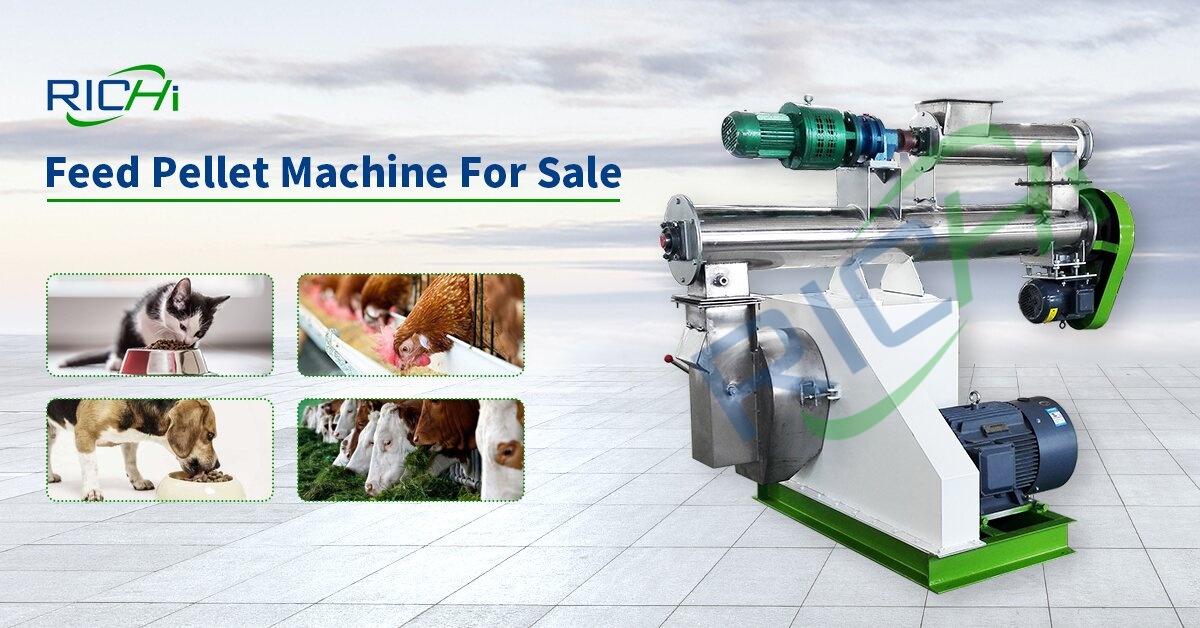
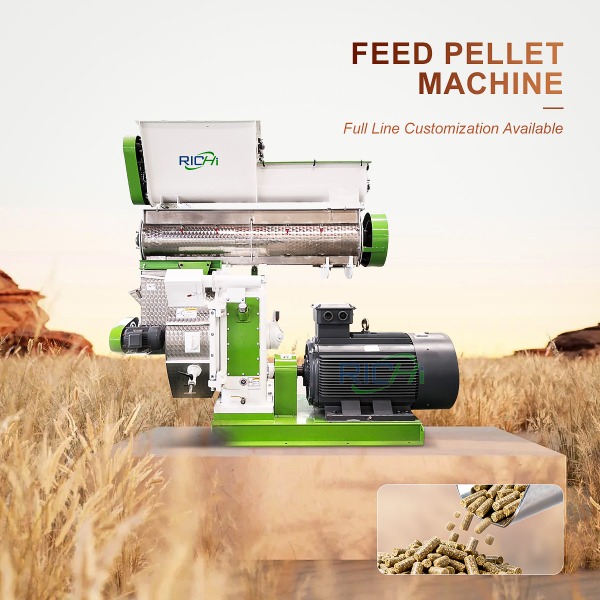
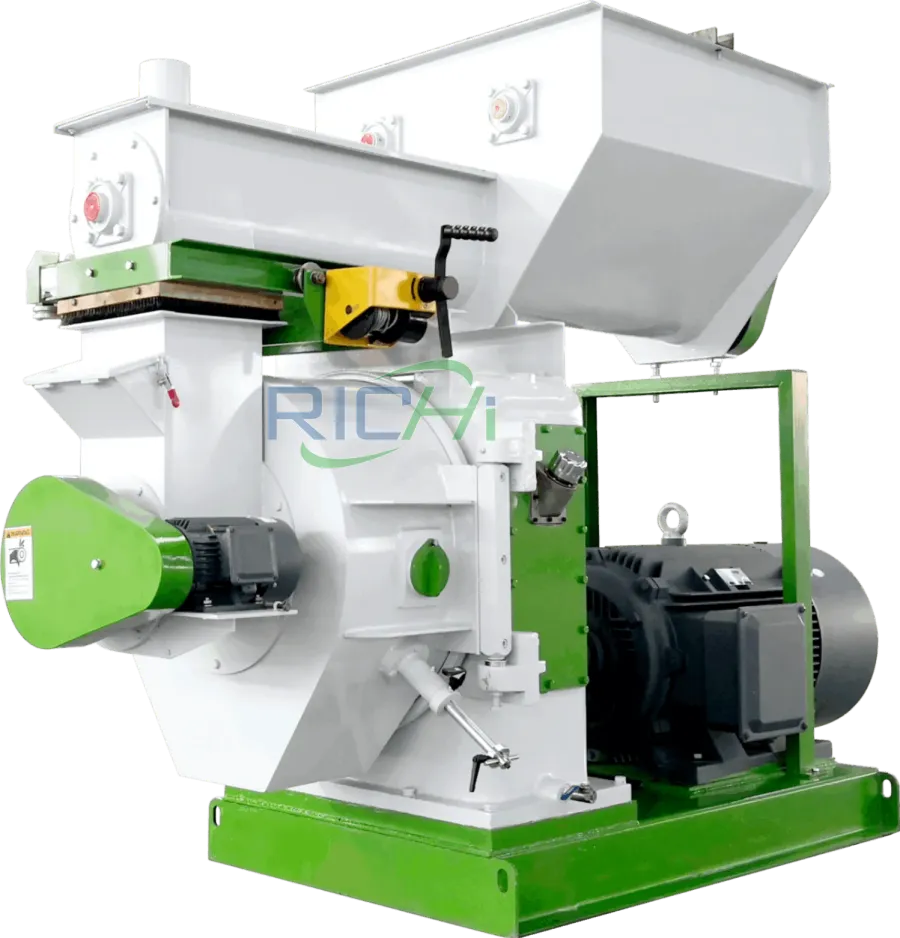
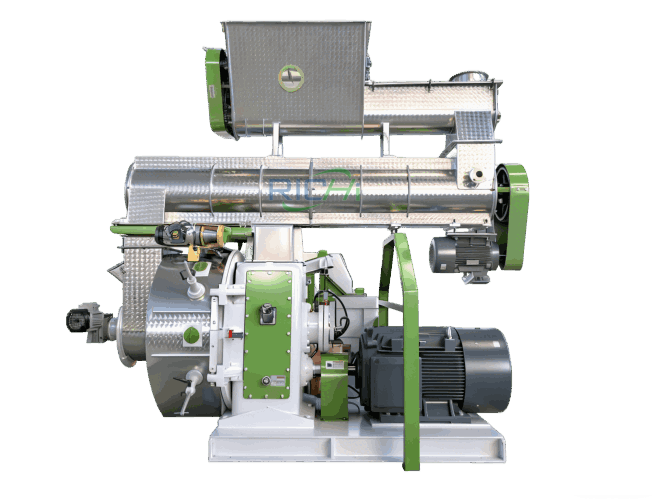
The pellet mill is the central forming machine in the production process.
After mixing, the prepared material enters the pellet mill and is compressed between rollers and the die. The material passes through the die holes and is cut into pellets.
A properly selected pellet machine should provide stable feeding, consistent compression, and suitable pellet formation for the intended formula.
The die should also be selected according to the desired pellet diameter and material characteristics.
Regular maintenance of rollers, bearings, die surfaces, and other wearing components helps maintain stable production.
Can Higher Capacity Reduce Production Costs?
Higher output can reduce certain production costs per ton, particularly when labor and equipment utilization are optimized.
However, this does not mean that the largest machine is automatically the most economical.
If a farm only needs several tons of feed per day, purchasing a machine designed for much higher production may result in unnecessary capital expenditure.
Electricity consumption, maintenance, spare parts, labor, and equipment utilization should all be included in the cost calculation.
The most economical system is generally one that matches actual demand while providing reasonable room for growth.
For more information about equipment selection and production planning, visit this site to compare different livestock feed processing solutions.
How Can Farmers Improve Production Efficiency?
Good preparation is one of the easiest ways to improve efficiency.
Raw materials should be properly cleaned and crushed before mixing. The mixer should be loaded according to its designed batch size, and the pellet mill should receive a stable material flow.
Operators should also monitor pellet moisture, appearance, durability, and temperature.
Regular maintenance is equally important. Worn dies or rollers can affect pellet quality and reduce production efficiency.
A clean production environment also helps reduce contamination and improves overall operating conditions.
Where Can Buyers Learn More?
Before choosing equipment, buyers should compare the production process, raw materials, capacity, and supporting machinery rather than focusing only on the main machine. find out here now can be used as a natural reference for additional information about livestock feed processing equipment, production line configurations, and pellet manufacturing solutions. This can help farmers better understand how different equipment combinations affect investment, efficiency, and future expansion.
Final Thoughts
Goat feed pellet machine capacity should be selected according to actual feed demand rather than simply choosing the highest advertised output.
Raw material characteristics, moisture, pellet diameter, formula composition, die specification, and supporting equipment all influence actual production.
For a small farm, a compact machine operated for several hours per day may be sufficient. A commercial goat farm may require a larger automated system with balanced grinding, mixing, pelletizing, cooling, screening, and packaging capacity.
An experienced Richi machinery manufacture team can evaluate the complete production process and help match equipment capacity with the farm’s actual requirements.
By planning capacity carefully from the beginning, goat producers can avoid unnecessary investment, reduce production bottlenecks, and create a feed production system that can grow with the farm.
Related post:https://pelletizerequipment.com/rabbit-pellet-making-machine/