
Pet food manufacturing attracts investors for good reasons. Demand is steady, products are consumable, and owners buy repeatedly. Unlike fashion or electronics, pet food does not go out of style. A dog eats every day, and a cat eats every day. That predictability looks attractive on a business plan.
But the industry also has a high failure rate among new entrants. Projects fail for reasons that have little to do with demand. They fail because the product does not match the market, because raw materials cannot be sourced consistently, because quality drifts, because working capital runs out, or because the plant was designed for a product it cannot actually make.
Understanding why projects succeed or fail is more useful than studying equipment specifications. The equipment matters, but it is only one part of a larger system. The decisions made before and after the equipment purchase usually determine the outcome.
The Market Question Comes First
The most common mistake in new pet food projects is starting with the machine instead of the market. An investor sees a pet food extrusion equipment listing online, compares prices, and begins planning a plant. But the machine is only useful if there is a market for what it produces.
The market question has several parts. Who will buy the product? Pet owners, retailers, veterinarians, or contract buyers? What species will the product serve? Dogs and cats have different nutritional needs. What life stages will be covered? Puppy, adult, senior, or all of them? What price point is realistic in the target market? Premium products require premium ingredients and premium packaging. Budget products require cost control at every step.
A producer who cannot answer these questions clearly is not ready to buy equipment. A supplier who sells a machine without asking these questions is not providing good service.
Product Definition Drives Everything
Once the market is understood, the product must be defined. Dry kibble, semi-moist food, wet food, treats, and specialty diets all require different production processes. Most new producers start with dry kibble because the equipment is more accessible and the market is larger. But even within dry kibble, there are many variations.
Kibble size, shape, density, hardness, color, and coating all affect how the product performs in the market. A product for small breed dogs needs smaller kibble. A product for cats needs higher protein and a different texture. A product for senior pets may need softer kibble. These differences affect the extrusion process, the die design, the drying parameters, and the coating system.
The product definition should also consider packaging. Bag size, material, closure, and design all influence cost and customer perception. A premium product in a cheap bag will not sell. A budget product in an expensive bag will not make money.
Raw Material Reality
Pet food formulas use a wide range of ingredients. Common ones include corn, wheat, rice, soybean meal, poultry meal, fishmeal, meat and bone meal, animal fat, vegetable oil, vitamins, minerals, and palatants. The availability and cost of these ingredients vary by region.
A producer in a grain-producing region has an advantage in energy sources. A producer near a slaughterhouse or fish processing plant has an advantage in protein sources. A producer far from both must pay more for transport, which raises the cost of every bag.
Consistency is as important as price. A formula that works with one batch of ingredients may behave differently with the next. Moisture, protein, fat, and fiber content all vary. A producer who does not test incoming materials will struggle to produce consistent kibble.
Imported ingredients add another layer of complexity. Vitamins, minerals, and specialized proteins are often imported. Their cost is sensitive to exchange rates and shipping schedules. A producer must plan inventory carefully to avoid shortages and excessive stock.
The Extrusion Process and Its Limits
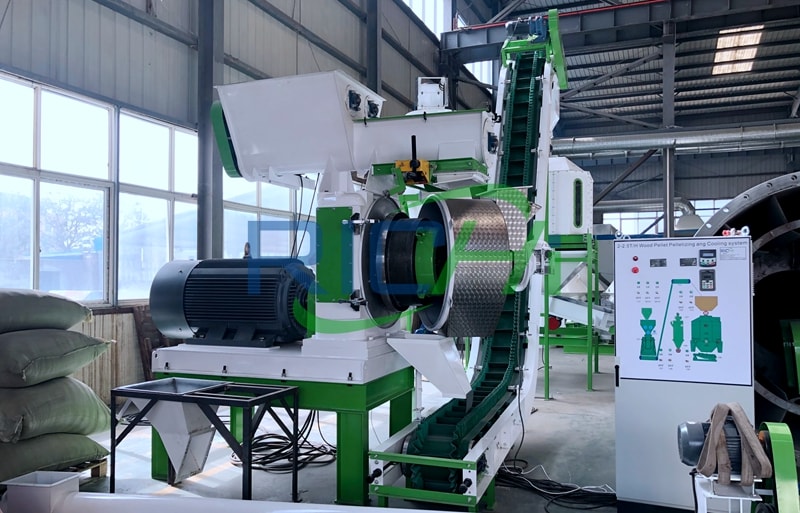
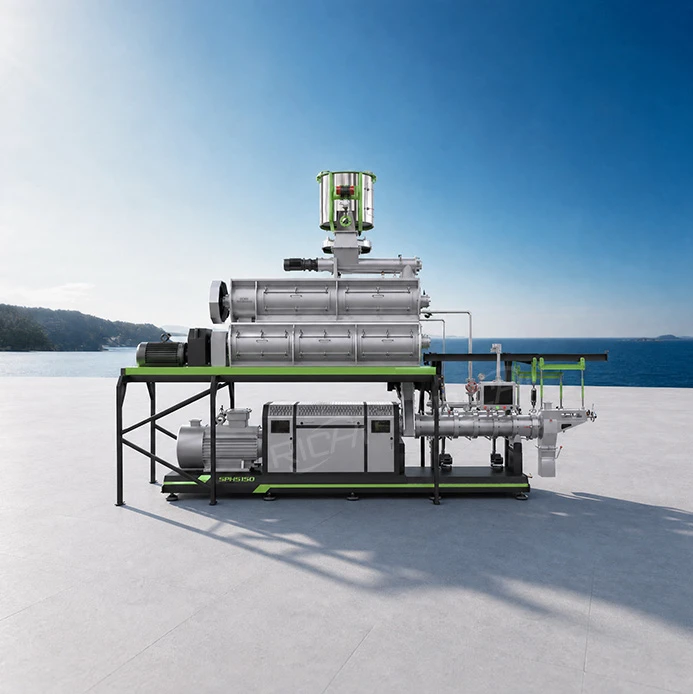
Extrusion is the core technology for dry pet food. The process uses heat, moisture, and pressure to cook the ingredients, then forces them through a die to form the final shape. The expansion that occurs as the product exits the die gives the kibble its texture and density.
The process has limits. High-fat formulas reduce friction inside the extruder and can produce soft or poorly expanded kibble. High-protein formulas can be difficult to cook uniformly. Formulas with low starch content expand less and may need additional binders. Dog food and cat food behave differently, and the settings must be adjusted accordingly.
These limits mean that a formula cannot be designed in isolation from the process. A nutritionist can design a formula that meets the animal’s needs, but the production team must confirm that the formula extrudes well. Testing is essential. Small-scale trials can reveal problems before full production begins.
The Supporting Equipment Matters
The extruder gets the most attention, but the supporting equipment determines whether the line runs consistently. Grinding, mixing, drying, coating, cooling, screening, and packaging all affect the final product.
Grinding reduces raw materials to a consistent particle size. If the grind is too coarse, the kibble may be weak. If it is too fine, the extruder may struggle to push the material through the die.
Mixing blends ingredients uniformly. If the mixing is uneven, some kibble will have more nutrients than others. This affects animal health and product consistency.
Drying removes moisture after extrusion. If the product is overdried, it becomes brittle and generates fines. If it is underdried, it may mold in storage.
Coating applies fat, flavors, and heat-sensitive nutrients. If the coating is uneven, palatability suffers. If the fat is not properly absorbed, the bag becomes greasy and the product looks unappealing.
Cooling brings the product to ambient temperature before packaging. If the product is bagged warm, moisture migrates inside the bag and quality drops.
Screening removes fines and oversized kibble. Fines reduce yield and create dust. Oversized kibble may be rejected by customers.
Packaging protects the product and presents the brand. If the bag fails, the product is lost. If the design is poor, the product does not sell.
What Turnkey Projects Offer
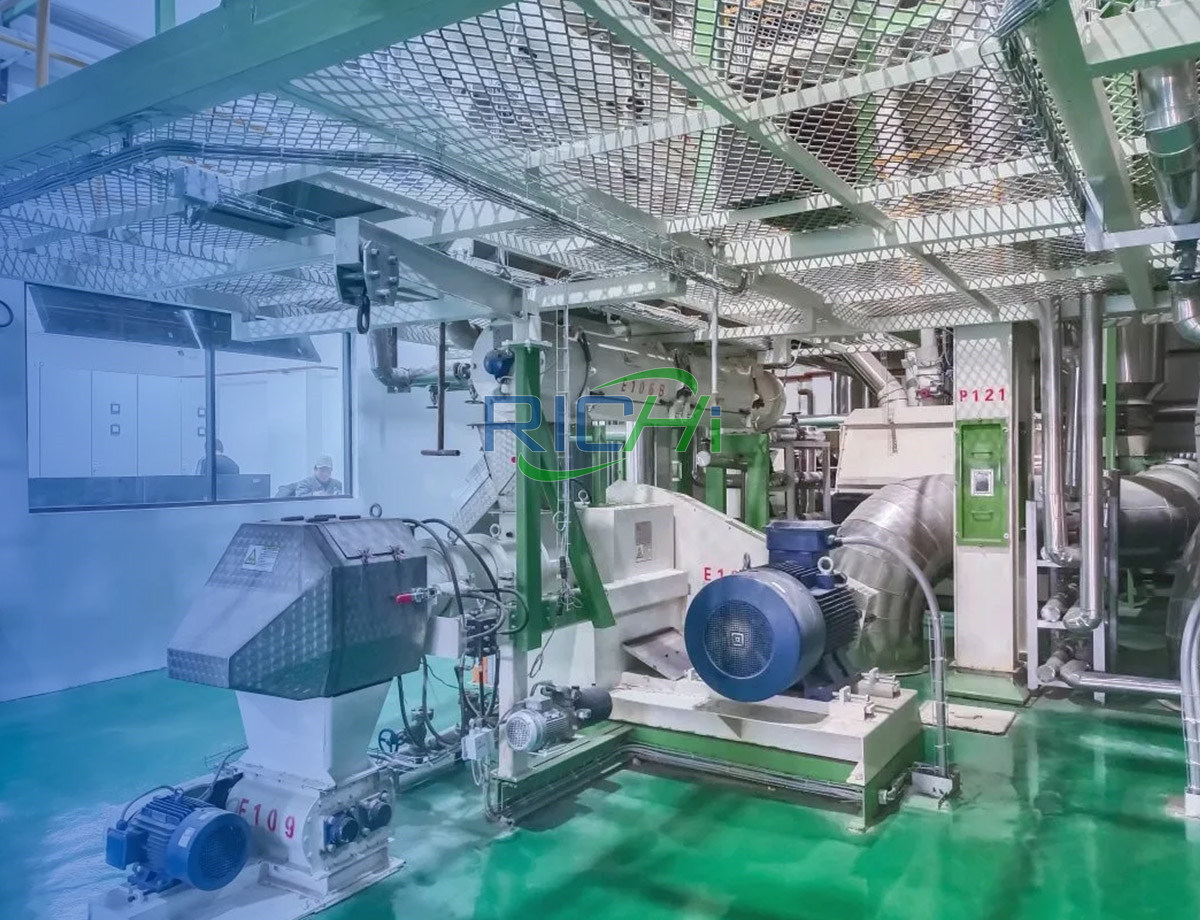
For investors new to pet food production, a turnkey approach can reduce risk. A supplier handling a turnkey project pet food extrusion equipment for sale with factory layout design takes responsibility for the design, equipment supply, installation, and commissioning of the complete line. This simplifies coordination and reduces the chance of mismatched equipment.
But turnkey projects require careful evaluation. The supplier’s experience matters. A supplier who has built similar plants in similar markets will anticipate problems that others miss. References should be checked. Site visits, if possible, are valuable.
The factory layout is particularly important. Material flow should be smooth, with raw materials entering at one end and finished product exiting at the other. Storage should be located to minimize handling. Dust control should be designed into the layout. Utilities should be sized for current and future needs.
A layout that looks good on paper may not work in practice. Traffic flow, worker movement, maintenance access, and safety all affect daily operation. A supplier who understands these practical details will provide a better layout than one who only sells machines.
Quality Control and Consistency
Consistency is the hardest part of pet food production. Raw materials vary. Equipment wears. Operators change. A batch that performs well one week may perform differently the next. Customers notice.
Quality control starts with incoming materials. Moisture, protein, fat, fiber, and contaminants should be checked. A load of moldy grain can ruin an entire batch. A batch of low-quality protein can affect the nutritional value of the finished product.
In-process checks monitor grinding, mixing, extrusion, drying, and coating. Simple tests can catch problems before they become serious. Kibble size, hardness, moisture, and appearance should be checked regularly.
Finished product should be sampled and stored correctly. Bags should be stacked on pallets, away from walls and floors. The storage area should be dry and ventilated. Stock should be rotated so older product is used first.
Labeling must comply with local regulations. Ingredient lists, nutritional information, and feeding guidelines should be accurate. Misleading claims can lead to regulatory action and loss of customer trust.
Equipment Suppliers and Project Support
The equipment supplier relationship does not end at delivery. Dies wear out. Screws need replacement. Dryers require maintenance. Bearings fail. A supplier who can provide spare parts quickly and offer technical support is more valuable than one who offers a lower price but disappears after the sale.
Producers often review a manufacturer’s background before committing to a project. A company such as Richi Pelletizer may have experience across multiple feed and food applications. That breadth can be useful, but it should be verified against specific pet food experience. A supplier who has worked with similar products will anticipate problems that others miss.
For buyers who want to discuss their project and understand the options, why not try here to start a conversation about equipment, layout, and production planning. A serious supplier will ask about the target market, raw materials, and budget before recommending equipment.
Planning and Investment
Setting up a pet food plant is a capital project. It requires land, buildings, utilities, equipment, and working capital. The investment should be planned in phases.
Market research comes first. Who are the customers? What products do they buy? What prices do they pay? This information shapes the product and the plant.
Capacity planning follows. How much product can be sold? How many shifts are needed? How much storage is required? The plant should be sized to meet current demand with some room for expansion.
Equipment selection and supplier evaluation come next. The cheapest option is rarely the best. Total cost of ownership includes energy, maintenance, spare parts, and downtime.
Training and quality control are ongoing tasks. Operators need to understand the process. Records should be kept. Customer feedback should be collected and acted on.
Common Reasons Projects Fail
Several failure patterns appear repeatedly in new pet food ventures.
No clear market. The producer builds a plant without knowing who will buy the product.
Wrong product for the market. The product is too expensive, too cheap, or unsuitable for local preferences.
Inconsistent raw materials. The formula depends on ingredients that are not reliably available.
Undersized supporting equipment. The dryer, coater, or cooler cannot keep up with the extruder.
Poor quality control. The product varies from batch to batch, and customers lose trust.
Insufficient working capital. Raw materials must be purchased before product is sold. Cash flow must be planned carefully.
Weak distribution. The product cannot reach customers efficiently.
Conclusion
Pet food projects succeed or fail for reasons that go far beyond equipment. The market, the product, the raw materials, the process, the quality control, and the distribution all matter. A pet food extrusion equipment purchase is an important step, but it is not the whole project.
Investors considering a turnkey project pet food extrusion equipment for sale with factory layout design should focus on the full system, not just the machine. They should work with suppliers who understand the industry, ask detailed questions, and provide support after commissioning. For those who plan carefully and operate consistently, pet food production can be a sustainable business.