

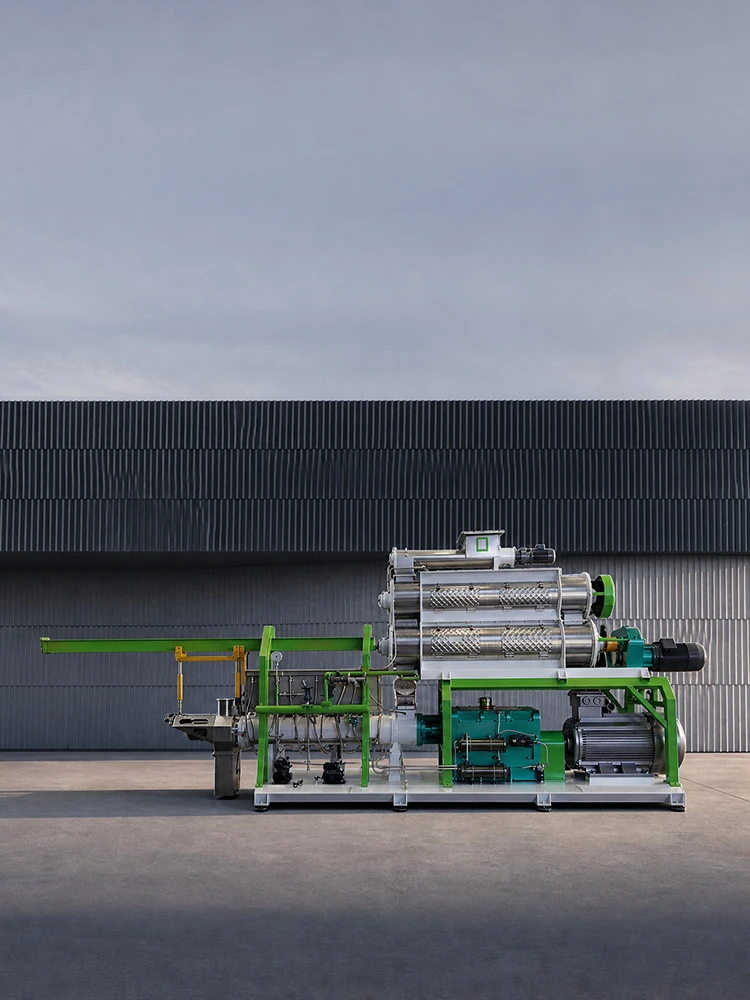
Why Is Fish Feed Processing Different From Ordinary Feed Making?
Aquaculture has developed into an important source of food production in many parts of the world. As fish farming becomes more intensive, feed quality has a direct relationship with feeding efficiency, water management, and production practices.
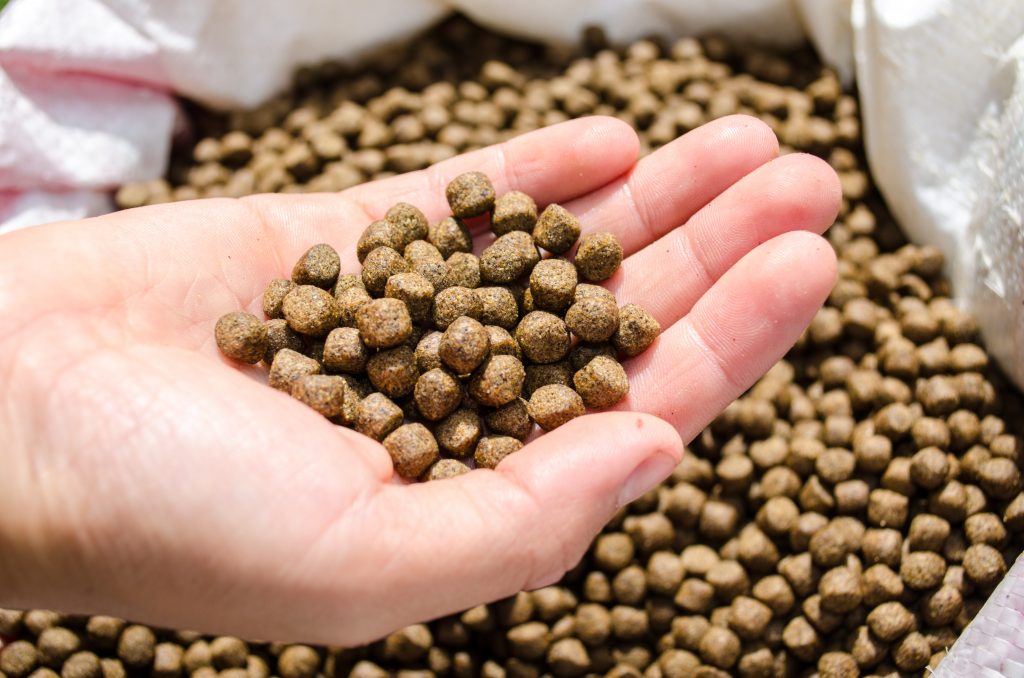
Unlike many terrestrial livestock feeds, aquatic feed must perform in water. A pellet may need to float for a certain period, sink at a controlled rate, or remain stable long enough for fish to consume it. These requirements influence both the formulation and the manufacturing process.
Fish feed is also produced in different sizes and physical forms. Small fry require very fine particles, while larger fish may consume pellets several millimeters in diameter.
This means that producing aquatic feed is not simply a matter of grinding ingredients and pressing them into pellets. Moisture, starch content, temperature, pressure, pellet density, drying, and coating all affect the final product.
Extrusion technology is particularly important because it allows manufacturers to control the physical properties of many aquatic feeds. Understanding how this process works can help explain why extrusion is widely used in modern fish-feed production.
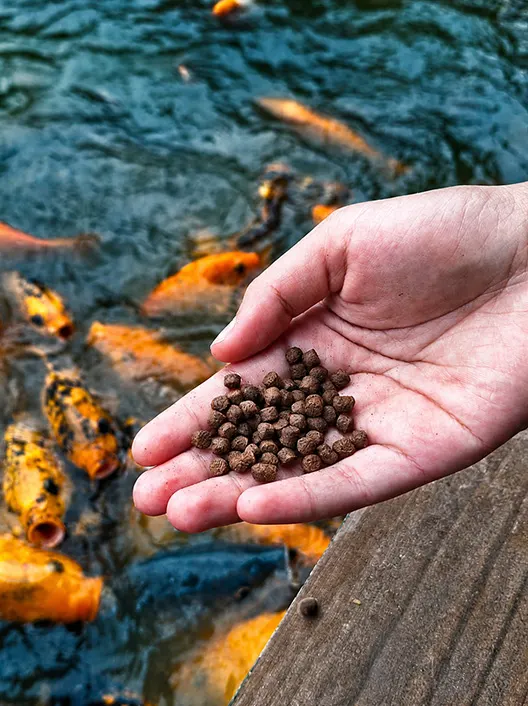
What Is Extrusion and Why Is It Used for Fish Feed?
Extrusion is a thermal and mechanical processing method in which a prepared feed mixture is forced through a die under controlled pressure and temperature.
During extrusion, raw materials are subjected to mechanical shear and heat. Moisture is also involved in the process. These conditions can gelatinize starch and modify the physical structure of the feed mixture.
When the material leaves the die, the pressure drops rapidly. Water inside the hot extrudate can partially vaporize, causing the material to expand.
The degree of expansion influences pellet density. A sufficiently expanded product may float, while a denser formulation may sink.
This physical flexibility is one reason extrusion is useful for aquatic feed production.
However, floating ability should not be viewed as a property created by the machine alone. Ingredient formulation, starch level, moisture, processing temperature, screw configuration, die design, and cutting conditions all contribute to the final result.
How Does a Fish Food Extruder Machine Work?
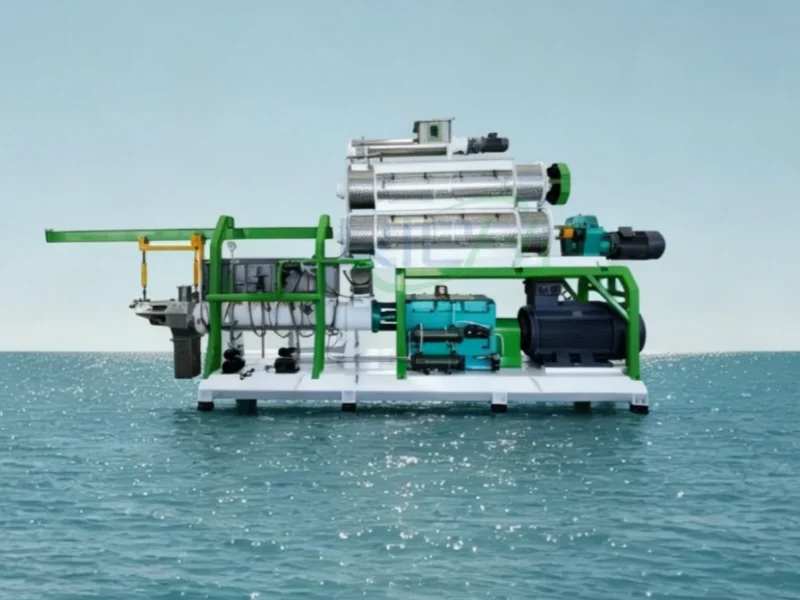
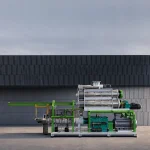
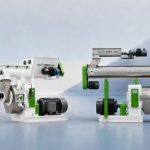
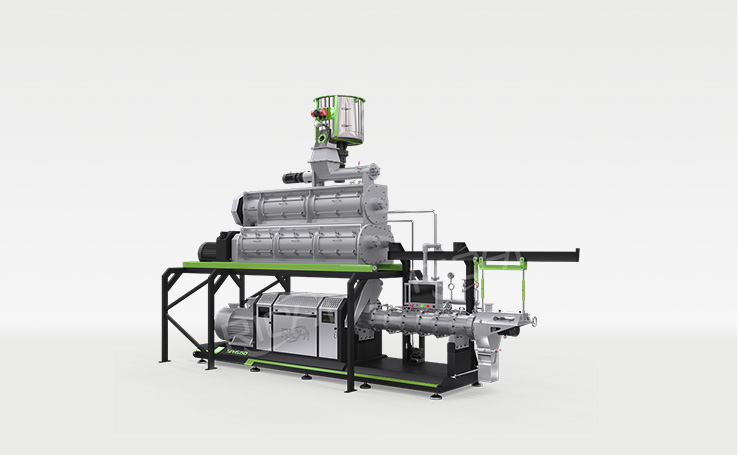
A fish food extruder machine generally consists of a feeding system, conditioning or moisture-control section, extrusion chamber, screw system, die, cutting mechanism, and associated drive components.
The prepared feed mixture enters the extruder at a controlled rate. Inside the extrusion chamber, rotating screws transport and compress the material.
As the material moves forward, mechanical energy and heat increase the temperature and pressure. The feed becomes a plasticized mass that can be forced through the die.
The die determines the basic cross-sectional shape of the extruded product. After leaving the die, a cutting device can divide the continuous material into pellets of a suitable length.
The process needs to remain stable. If feeding fluctuates significantly, moisture changes, or operating conditions become inconsistent, pellet size and density may also vary.
For this reason, extrusion is as much a process-control technology as it is a mechanical operation.
What Ingredients Are Commonly Used in Fish Feed?
Fish feed formulations vary according to species, growth stage, farming system, and nutritional objectives.
Common ingredients may include fishmeal, soybean meal, other plant protein sources, cereal products, oils, vitamins, minerals, and selected functional ingredients.
The exact formulation is a nutritional question rather than a universal equipment formula. Different species have different protein, lipid, energy, amino-acid, and digestibility requirements.
Ingredient particle size also matters. Large particles can interfere with mixing and extrusion, particularly when producing small-diameter pellets.
Raw materials should therefore be ground to an appropriate size before entering the extrusion process.
The ingredients also need to be mixed evenly. Nutrients such as vitamins and minerals are often included in relatively small quantities, so poor mixing can create variation between pellets.
A consistent formulation provides the foundation for consistent processing.
How Does Starch Affect Floating Fish Feed?
Starch plays an important role in extrusion.
During processing, starch can gelatinize under the influence of heat, moisture, and mechanical shear. This changes the structure of the feed and can contribute to pellet expansion.
Expansion reduces density, which is important when producing floating feed.
However, more expansion is not automatically better. Excessive expansion may create fragile pellets, while insufficient expansion may result in pellets that sink when floating feed is required.
The desired result depends on the fish species, feeding behavior, water conditions, and product specifications.
This is why extrusion settings should be developed together with the feed formulation rather than treating the machine and recipe as completely separate variables.
How Are Floating and Sinking Fish Pellets Produced?
Floating and sinking pellets can often be produced through different extrusion conditions and formulations.
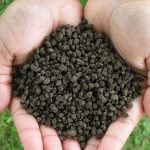
Floating feed generally requires sufficient expansion to reduce pellet density below the density of water.
Sinking feed can be produced with a denser structure by adjusting formulation and processing conditions.
Slow-sinking products can also be useful for species with particular feeding behaviors.
The final density is influenced by several factors, including moisture, starch, pressure, temperature, screw configuration, die characteristics, and cutting.
After extrusion, drying can further change the physical properties of the pellets.
Therefore, manufacturers normally establish processing conditions through testing rather than relying on one universal setting.
What Is the Difference Between Fish Feed and Shrimp Feed?
Fish and shrimp have different biological and feeding characteristics, so their feed products are not necessarily interchangeable.
Fish often consume pellets in the water column or near the surface, depending on the species and feeding behavior. Shrimp generally feed closer to the bottom and rely heavily on their ability to locate and consume feed particles in water.
Feed stability is therefore particularly important in shrimp production. A shrimp pellet needs to maintain its physical structure for an appropriate period without disintegrating too quickly.
The nutritional requirements also differ between species. Protein sources, lipid levels, mineral composition, attractants, and other formulation considerations can vary.
Pellet size and hardness must also match the animal’s feeding behavior and growth stage.
These differences naturally raise an equipment question: what is the difference between fish feed and shrimp feed making machine?
The distinction is not always a completely different machine. In many cases, the same general extrusion technology can be adapted to different aquatic feeds, but die specifications, formulation, conditioning, moisture, and processing settings may differ.
For certain shrimp-feed products, specialized pelletizing or extrusion configurations may be selected depending on the desired physical properties.
Why Is Water Stability Important for Shrimp Feed?
When feed enters water, it begins interacting with the surrounding environment.
If a pellet disintegrates too quickly, nutrients can be released into the water before the shrimp consume them. This may increase nutrient losses and contribute to water-quality problems.
For this reason, shrimp feed often requires good water stability.
The appropriate stability period depends on the feeding strategy, species, pellet size, water temperature, and farming conditions.
Fish feed also needs suitable water stability, but the required characteristics can be different because fish may consume floating or slowly sinking pellets more quickly.
This illustrates an important principle: feed quality is not determined only by nutritional composition. Physical performance in the farming environment is equally important.
What Happens After Extrusion?
Extrusion is only one stage in aquatic-feed manufacturing.
Fresh extruded pellets typically contain considerable moisture and heat. They generally need to be dried before storage.
A dryer removes excess moisture under controlled conditions. The drying process should be sufficiently gentle to reduce moisture without unnecessarily damaging heat-sensitive nutrients.
After drying, the pellets may pass through a cooler.
Cooling brings the product closer to ambient temperature and helps prepare it for storage or further processing.
Screening can remove excessive fines or particles outside the desired size range.
Depending on the feed formulation, oils or other liquid ingredients may be added after drying through a coating system. This can allow manufacturers to add certain heat-sensitive or energy-dense components after extrusion.
The final product can then be packed or transferred to bulk storage.
Why Is Post-Extrusion Drying Necessary?
Fresh extruded feed generally contains more moisture than a finished commercial product should contain.
If the moisture level remains too high during storage, the risk of microbial growth and quality deterioration can increase.
Drying therefore plays an important role in shelf life.
However, drying must be controlled carefully. Excessive temperature or prolonged exposure can affect certain nutrients and may alter pellet structure.
The appropriate drying process depends on pellet size, moisture content, production capacity, and feed composition.
Large commercial systems may use continuous dryers with multiple zones so that temperature and airflow can be controlled more precisely.
Small-scale operations may use simpler drying arrangements, but moisture should still be monitored rather than estimated visually.
Can Extruded Fish Feed Be Coated With Oil?
Yes. Oil coating is commonly used when additional lipid or other liquid ingredients need to be incorporated after extrusion.
The reason for post-extrusion coating is partly related to heat sensitivity and process efficiency.
Some oils can be added before extrusion, but adding a large amount of oil to the raw mixture may influence extrusion behavior. Post-extrusion coating can provide another way to increase the energy density of the final feed.
A coating system typically sprays liquid ingredients onto cooled or partially cooled pellets while they move through a controlled mixing environment.
Uniform coating is important. Excessive liquid in one area can create inconsistent feed quality, while insufficient mixing can cause nutrient distribution problems.
The exact coating process depends on the formulation and intended product.
How Important Is Pellet Size?
Pellet size needs to correspond to the animal’s mouth size and feeding behavior.
Young fish generally require smaller feed particles. As fish grow, the pellet diameter can increase.
Producing very small pellets presents additional technical challenges because particle-size consistency becomes more important.
Die openings and cutting conditions need to be selected carefully.
Pellet length also matters. Very long pellets may not be suitable for certain species or automatic feeding systems.
A well-designed production system should therefore allow reasonable flexibility in pellet specifications if several feed products are planned.
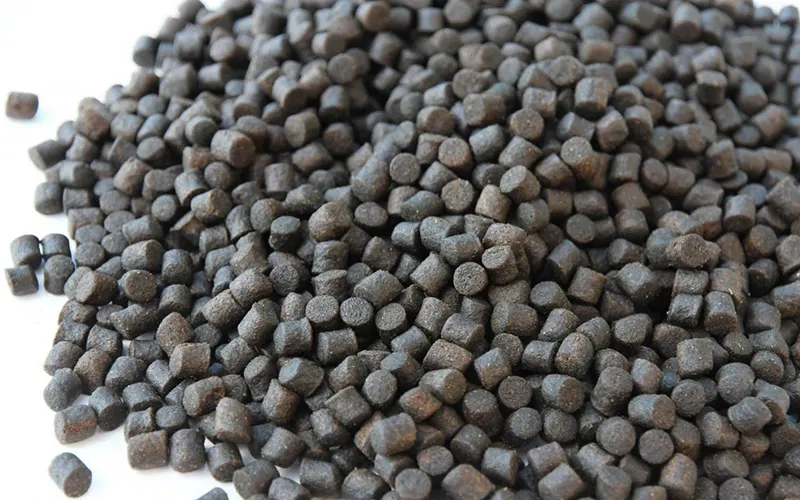
Does Feed Density Affect Fish Feeding?
Yes.
Density determines whether a pellet floats, sinks slowly, or sinks quickly.
Floating feed can be useful when farmers need to observe feeding behavior from the surface. Uneaten pellets can also be easier to identify in some pond systems.
Sinking feed may be appropriate for bottom-feeding species or specific farming environments.
The important point is that density should match the biological and management requirements of the farm.
Extrusion technology provides a relatively flexible way to adjust density, but the result depends on formulation and process conditions rather than the extruder alone.
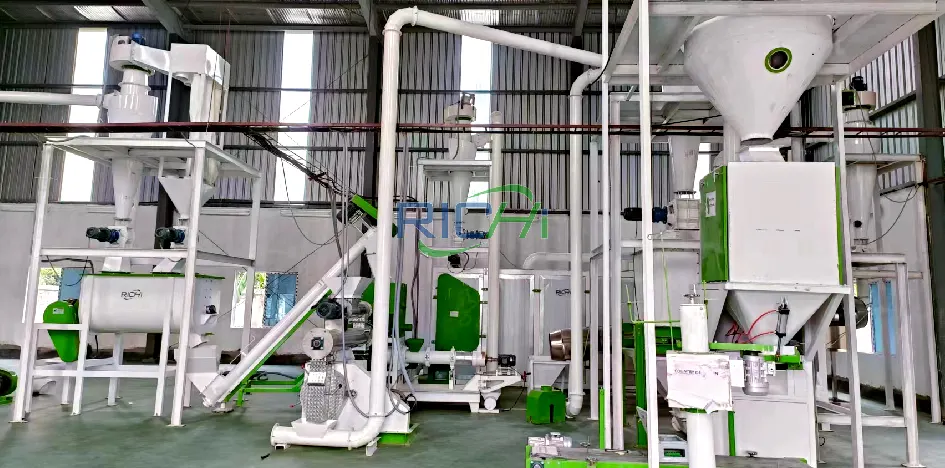
What Does a Small Fish Feed Production Line Usually Include?
A small aquatic-feed production line can contain fewer machines than a large industrial facility, but the basic process remains similar.
A typical process may include:
Raw-material receiving → grinding → weighing and batching → mixing → extrusion → drying → cooling → screening → coating if required → packaging
Not every project needs every stage.
For example, a facility receiving already-ground ingredients may not require a large grinding section. Similarly, a simple feed formulation may require less sophisticated liquid-addition equipment.
Production capacity is another major factor.
A small farm producing feed for its own fish may have very different requirements from a commercial manufacturer supplying multiple aquaculture farms.
The process should therefore be designed around actual production demand.
What Should Be Considered When Planning an Aquatic Feed Plant?
The first consideration is the target species.
Feed for tilapia, carp, catfish, trout, ornamental fish, and other species may have different nutritional and physical requirements.
The second consideration is production capacity.
The equipment should be able to process the expected volume without excessive idle capacity or constant overload.
The third consideration is raw-material availability.
Local access to protein sources, grains, oils, additives, and other ingredients can influence the practical feed formulation.
The fourth consideration is product variety.
If a plant needs to produce both floating and sinking feed, or multiple pellet diameters, the equipment configuration should provide sufficient flexibility.
Finally, storage conditions should be considered. Feed ingredients and finished pellets need protection from moisture, pests, contamination, and excessive heat.
How Can Fish Feed Quality Be Evaluated?
Quality control should cover both nutritional and physical characteristics.
Moisture is one of the basic parameters because it influences storage stability.
Pellet durability indicates how well the feed withstands transportation and handling.
Water stability is important for aquatic applications.
Floating time or sinking behavior can be tested depending on the intended product.
Particle size should also remain within the required range.
Laboratory analysis can be used to measure crude protein, crude fat, fiber, ash, moisture, and other nutritional parameters.
The appropriate testing program depends on the feed type and production scale.
A combination of laboratory analysis and routine production checks provides a more complete picture than relying on visual appearance alone.
What Common Problems Occur During Extrusion?
Several problems can occur if the raw material or process conditions are not properly controlled.
Uneven feeding can lead to inconsistent pellet density.
Excessive moisture can interfere with expansion and drying.
Insufficient moisture can affect processing stability.
An unsuitable formulation may produce pellets that are too fragile or have the wrong density.
A blocked die can interrupt production and increase mechanical stress.
Improper cutting can create excessive fines or inconsistent pellet lengths.
Many of these problems are related to the interaction between formulation and processing rather than to a single machine component.
This is why operators should change one variable at a time when troubleshooting whenever possible. A systematic approach makes it easier to identify the cause.
How Can Energy Consumption Be Managed?
Extrusion involves mechanical energy and often requires substantial thermal energy elsewhere in the process.
Drying can be one of the largest energy-consuming stages, especially when incoming ingredients contain significant moisture.
Good moisture management can therefore reduce unnecessary drying requirements.
Grinding also consumes energy, so particle size should be appropriate rather than unnecessarily fine.
Regular maintenance is another factor. Worn components can reduce process efficiency and increase operating costs.
Plant layout can also influence energy use because excessive conveying distances require additional power.
For larger facilities, monitoring energy consumption per ton of finished feed can provide useful information about process efficiency.
What Should Buyers Ask an Equipment Supplier?
Potential buyers can ask for technical specifications related to production capacity, motor power, pellet diameter, moisture requirements, die options, and operating conditions.
More importantly, they can ask whether the equipment has been tested with the intended raw materials.
A machine’s theoretical capacity does not necessarily represent the output that will be achieved with every formulation.
It is also useful to understand which components require regular maintenance and which parts are considered wear components.
For plants producing multiple feed types, flexibility should be discussed in advance. Changing pellet diameter or product density may require different dies or operating parameters.
Clear technical documentation can also make installation and operator training easier.
What Information Should Be Collected Before Designing a Fish Feed Line?
A useful project information sheet can include:
- Target fish species
- Expected production capacity
- Feed types required
- Floating or sinking requirements
- Target pellet diameters
- Main raw materials
- Ingredient moisture
- Desired nutritional specifications
- Available electricity
- Available floor space
- Storage capacity
- Packaging requirements
This information allows the production process to be designed around actual needs.
Without it, equipment selection may become a comparison of machine specifications rather than a genuine process-design exercise.
How Does the Manufacturer Fit Into Equipment Selection?
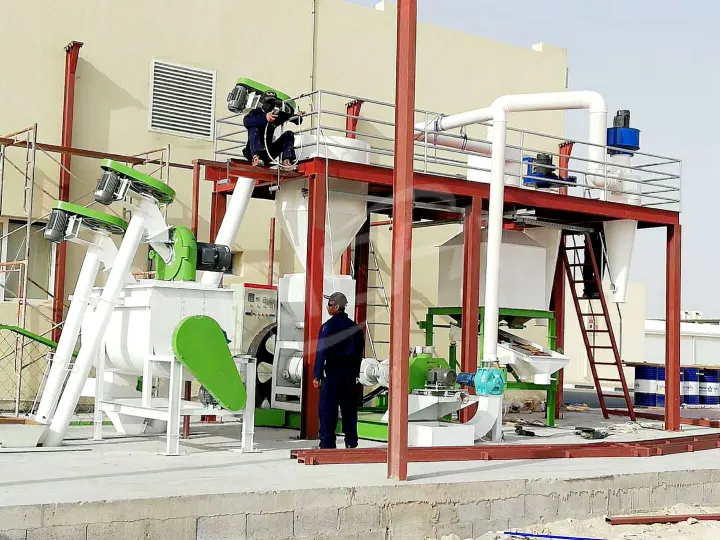
Manufacturers can provide useful technical information about machine configuration, capacity ranges, die options, maintenance, and process integration.
However, the supplier should be evaluated in relation to the specific production requirements.
For example, a manufacturer experienced in aquatic-feed equipment may be able to provide more relevant process information for a project involving multiple floating-feed formulations.
When researching manufacturers, pellet machine can be included as one source of equipment and process information for comparison.
The more useful question is not simply which company offers a machine, but whether the proposed configuration matches the feed formulation, target species, production capacity, and desired pellet characteristics.
Can One Extrusion System Produce Different Aquatic Feeds?
In many cases, an extrusion system can be adapted to produce different feed products.
However, changing products may require adjustments to formulation, moisture, feeding rate, screw configuration, die size, temperature, pressure, and cutting conditions.
A plant producing feed for several species should therefore consider changeover requirements during the design stage.
Product scheduling can also reduce unnecessary cleaning and adjustment.
For example, feeds with similar pellet sizes and processing characteristics may be easier to schedule consecutively than products requiring completely different settings.
The exact possibilities depend on the equipment design and feed formulations.
Conclusion: What Should Be Remembered About Fish Feed Extrusion?
Aquatic-feed extrusion is a combination of nutrition, mechanical processing, heat, moisture control, and product-quality management.
The process begins with properly prepared ingredients and continues through grinding, batching, mixing, extrusion, drying, cooling, screening, and sometimes coating.
Floating or sinking behavior is determined by the interaction between formulation and processing conditions. Pellet size, durability, water stability, and nutritional composition must all correspond to the requirements of the target species.
The difference between fish and shrimp feed also demonstrates why aquatic feed production cannot be approached with a single universal formula. Feeding behavior and environmental conditions influence both the formulation and the physical characteristics of the finished product.
For equipment planning, the most reliable starting point is therefore the feed itself: identify the species, define the desired pellet properties, analyze the raw materials, and determine the required production capacity. Once these factors are clear, the appropriate extrusion and downstream processing configuration becomes much easier to establish.