
Setting up a sinking fish feed production line requires careful planning because fish feed quality depends on much more than the pelletizing stage. A successful project needs to integrate raw material preparation, grinding, batching, mixing, conditioning, pelletizing, drying, cooling, screening, coating, conveying, and packaging into one coordinated system.
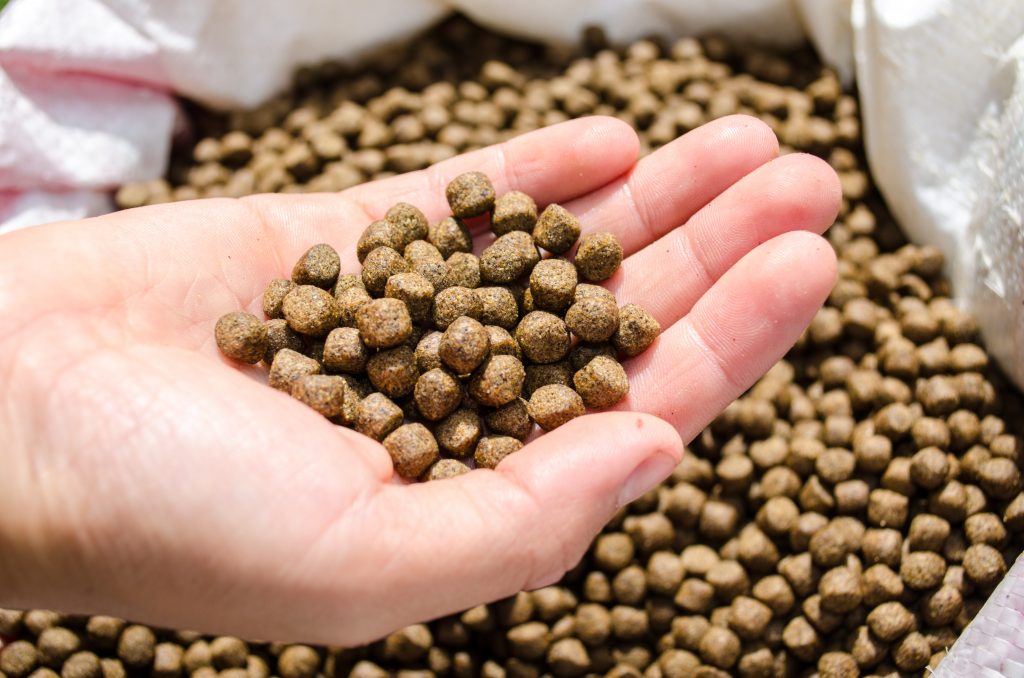
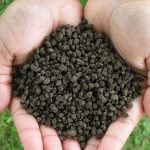
The objective is to produce stable and nutritionally balanced sinking fish feed with the appropriate pellet size, density, sinking speed, durability, water stability, and moisture content for the target fish species.
A commercial production line should also be designed around the required capacity, raw materials, feed formulas, factory layout, labor availability, energy supply, automation level, and future expansion plans.
This article explains how to set up a complete sinking fish feed production line, what equipment is required, how to design the process, and what factors should be considered before investing in a fish feed manufacturing project.
1. Define the Production Requirements
The first step is to clearly define what the production line needs to produce.
Before selecting equipment, determine:
- Target fish species
- Production capacity
- Pellet diameter
- Number of feed formulas
- Raw materials
- Required sinking speed
- Water stability requirements
- Automation level
- Packaging specifications
- Factory space
- Future production expansion
Different fish species have different feeding habits.
For example, some species feed mainly near the bottom, while others feed in the middle water layer. Juvenile fish also require smaller pellets than adult fish.
Therefore, the production line should be designed around the final product rather than simply selecting machines based on nominal capacity.
2. Determine the Required Capacity
Production capacity is one of the most important factors when setting up a fish feed plant.
A small farm may only require a relatively small production system, while a commercial feed factory may need several tons per hour or more.
Capacity affects almost every part of the project, including:
- Grinding equipment
- Batching system
- Mixer
- Pellet mill
- Dryer
- Cooler
- Screening machine
- Conveyors
- Storage bins
- Packing equipment
The entire line should be balanced.
For example, if the pellet mill can process 10 tons per hour but the dryer can only handle 6 tons per hour, the complete plant cannot continuously produce 10 tons per hour.
Therefore, equipment capacity should be evaluated as a complete system.
3. Identify the Raw Materials
The next step is to identify the ingredients that will be used.
Common raw materials for sinking fish feed include:
- Fish meal
- Soybean meal
- Corn
- Wheat
- Wheat bran
- Rice bran
- Corn gluten meal
- Rapeseed meal
- Peanut meal
- Poultry by-products
- Vegetable protein sources
- Fish oil
- Vegetable oil
- Vitamins
- Minerals
- Amino acids
- Attractants
- Binders
- Functional additives
The actual formula depends on the target species, growth stage, local ingredient availability, nutritional requirements, and production cost.
Raw material characteristics also affect equipment selection.
For example, high-fiber ingredients may require different grinding conditions from high-protein meals.
4. Develop Suitable Feed Formulas
The production line should be designed according to the feed formulas.
A formula determines not only nutritional composition but also processing behavior.
Protein, fat, starch, fiber, moisture, and mineral levels can all influence pellet formation.
For sinking feed, formula design also influences pellet density.
The feed should have sufficient density to sink but should not necessarily sink as rapidly as possible.
The ideal sinking behavior depends on the target species and feeding environment.
When several formulas are planned, the equipment should provide enough flexibility to handle different raw materials and pellet specifications.
5. Design the Basic Production Process
A commercial fish feed production line includes:
Raw material receiving → cleaning → grinding → batching → mixing → conditioning → pelletizing → drying → cooling → screening → coating → packing
Storage bins, conveying systems, dust collection, and control systems are integrated into the main process.
Each stage has a specific function.
Raw Material Receiving
Raw materials are unloaded and transferred into storage.
Cleaning
Impurities such as stones, metal particles, and unwanted materials are removed.
Grinding
Ingredients are reduced to the required particle size.
Batching
Ingredients are accurately weighed according to the formula.
Mixing
Different ingredients are distributed uniformly.
Conditioning
Steam and moisture prepare the feed material for pelletizing.
Pelletizing
The conditioned material is compressed into pellets.
Drying
Excess moisture is removed.
Cooling
Pellet temperature is reduced and moisture is stabilized.
Screening
Fines and broken pellets are separated.
Coating
Oil or other additives can be applied when required.
Packing
Finished pellets are weighed, bagged, sealed, and prepared for transportation.
6. Install a Raw Material Cleaning System
A cleaning system protects both the feed quality and the production equipment.
Common equipment includes:
- Vibrating screens
- Drum screens
- Magnetic separators
- Destoners
- Dust collectors
Magnetic separators are particularly important because metal particles can damage grinders and pellet mills.
A well-designed cleaning system also reduces contamination and improves the reliability of downstream equipment.
7. Choose the Right Grinding Equipment
Grinding is one of the most important preparation stages.
A hammer mill can reduce grains, meals, and other raw materials to a suitable particle size.
For small-diameter aquatic feed, finer grinding may be required.
A superfine grinder can be added when the formula or pellet specification requires very fine particles.
Proper grinding improves:
- Mixing uniformity
- Pellet formation
- Pellet durability
- Surface quality
- Nutrient distribution
However, grinding too finely can increase power consumption.
Therefore, the grinding system should be designed according to the actual product requirements.
8. Install an Accurate Batching System
Accurate batching is essential for consistent feed quality.
The batching system weighs individual ingredients according to the selected formula.
Automatic batching offers several advantages:
- Improved formula accuracy
- Reduced labor
- Better batch consistency
- Easier formula management
- Higher production efficiency
The number of weighing bins depends on the number of major ingredients and the production requirements.
Micro-ingredients can be handled through dedicated dosing systems or premix systems.
9. Select a Suitable Feed Mixer
After batching, ingredients enter the mixer.
The mixer should provide uniform distribution of all ingredients.
This is especially important when the formula contains small quantities of vitamins, minerals, amino acids, attractants, or other additives.
An appropriate mixing system should achieve the required uniformity within a reasonable mixing time.
The mixer capacity should also match the batching and pelletizing system.
10. Add Steam Conditioning
A conditioner is installed before the pellet mill.
The purpose of conditioning is to introduce steam and moisture into the feed material.
This can:
- Increase material temperature
- Improve moisture distribution
- Soften particles
- Improve pellet formation
- Increase pellet durability
- Improve starch gelatinization
- Reduce pellet mill load
The correct conditioning conditions depend on the formula.
High-protein and high-fat formulas may behave differently from formulas containing more grain and starch.
Therefore, steam addition should be controlled rather than simply maximized.
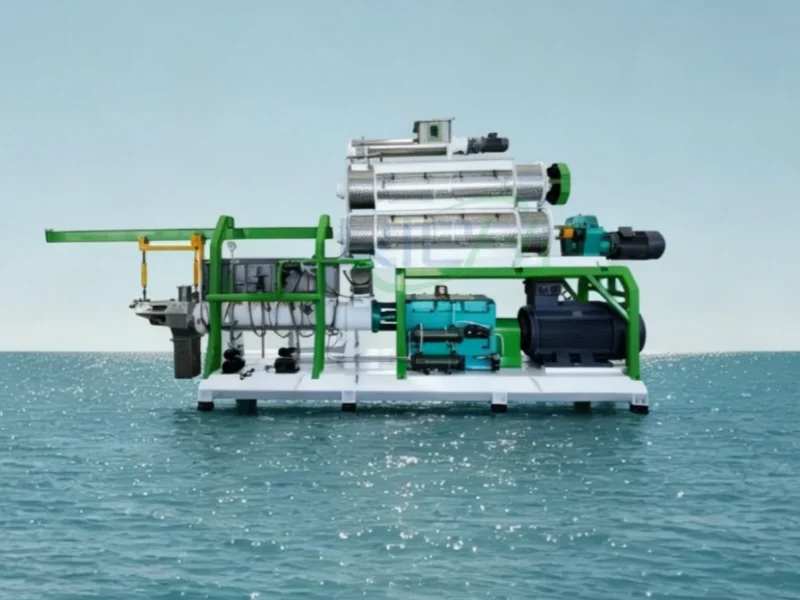
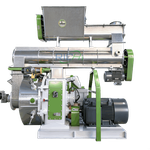
11. Select the Appropriate Fish Feed Pellet Mill
The pellet mill is the central forming machine in the production line.
It compresses conditioned material through die holes to form pellets.
When selecting the pellet mill, consider:
- Required production capacity
- Pellet diameter
- Formula characteristics
- Die compression ratio
- Motor power
- Operating conditions
- Expected working hours
- Maintenance requirements
Different die specifications can be used for different pellet diameters.
A production line designed to produce multiple sizes of sinking feed may require several die specifications.
The pellet mill should also be matched with the dryer and cooler.
12. Control Sinking Fish Feed Pellet Density
Density is especially important when setting up a sinking fish feed production line.
The pellets need enough density to move downward through water.
However, excessive density can cause pellets to sink too quickly.
Pellet density is influenced by:
- Formula composition
- Particle size
- Moisture
- Steam conditioning
- Die compression
- Pellet diameter
- Fat content
- Pellet structure
Therefore, density should be considered when designing both the formula and processing conditions.
13. Install a Fish Feed Dryer
Freshly produced pellets usually contain excess moisture.
A dryer reduces moisture to an appropriate level for storage.
A complete fish feed production line may use a continuous feed dryer designed for uniform moisture reduction.
Important factors include:
- Initial pellet moisture
- Pellet diameter
- Formula
- Production capacity
- Air temperature
- Residence time
- Final moisture requirement
The dryer should be matched to the pellet mill output.
If drying capacity is insufficient, the pellet mill may need to reduce its production rate.
14. Install a Pellet Cooler
After drying, pellets remain hot and need to be cooled.
The cooler reduces temperature and helps stabilize moisture.
Cooling before packaging is important because hot pellets can create condensation inside bags.
A suitable cooler improves:
- Storage stability
- Moisture uniformity
- Pellet durability
- Packaging performance
The cooling capacity should be compatible with the dryer and pellet mill.
15. Add a Screening System
After cooling, pellets should pass through a screening machine.
The screen separates:
- Finished pellets
- Fines
- Broken pellets
- Oversized particles
Screening improves the consistency of the finished product.
However, if the production line generates excessive fines, the manufacturer should investigate the cause.
Possible reasons include:
- Poor conditioning
- Incorrect die compression
- Worn die or rollers
- Improper drying
- Excessive conveying impact
- Poor pellet durability
16. Add a Coating System When Necessary
Some sinking fish feed formulas require additional oil or functional ingredients after pelletizing.
A coating machine can apply:
- Fish oil
- Vegetable oil
- Attractants
- Enzymes
- Other functional additives
Post-pellet coating is useful when certain ingredients need to be protected from high processing temperatures.
The coating system should distribute additives uniformly.
17. Select the Packing System
The final stage is packaging.
An automatic packing system can perform:
- Weighing
- Bag filling
- Bag clamping
- Sealing
- Coding
- Conveying
- Palletizing
Packing capacity should be matched to the production line.
For high-output factories, automatic packing can significantly reduce manual labor.
Different bag sizes can be supported depending on customer requirements.
18. Design the Material Conveying System
Conveying equipment connects different production sections.
Common equipment includes:
- Screw conveyors
- Belt conveyors
- Bucket elevators
- Chain conveyors
The conveying system should minimize material loss and pellet damage.
Finished pellets are more fragile than raw materials, so excessive drop heights and high conveying speeds should be avoided.
A good plant layout can reduce unnecessary material transfers.
19. Plan the Factory Layout
Factory layout has a direct impact on production efficiency.
The plant should provide logical material flow from raw materials to finished products.
A typical arrangement may include:
Raw material receiving → storage → cleaning → grinding → batching → mixing → conditioning → pelletizing → drying → cooling → screening → coating → finished product storage → packaging
The layout should also provide sufficient space for:
- Equipment maintenance
- Spare parts
- Operator access
- Electrical systems
- Dust collection
- Raw material storage
- Finished product storage
Equipment height and building structure should be considered before construction.
20. Design the Electrical Control System
A centralized control system can integrate the main production equipment.
Operators can monitor and control:
- Raw material feeding
- Batching
- Mixing
- Conditioning
- Pelletizing
- Drying
- Cooling
- Screening
- Coating
- Packaging
Automation improves consistency and reduces manual intervention.
For large production lines, centralized PLC control and process monitoring can help operators identify abnormal conditions quickly.
21. Consider Dust Collection
Feed production generates dust during receiving, cleaning, grinding, conveying, and batching.
A dust collection system can help maintain a cleaner working environment and improve equipment operation.
Dust collection points should be designed according to the process layout.
The grinding section normally requires particular attention because hammer mills can generate significant quantities of fine particles.
22. Plan Utility Requirements
Before installing the production line, the factory should evaluate its utility requirements.
These may include:
- Electricity
- Steam
- Water
- Compressed air
- Ventilation
- Lighting
- Drainage
The electrical supply should be sufficient for the installed equipment.
Steam requirements should be considered when designing the conditioning system.
If a steam boiler is required, its capacity should match the production line.
23. Consider Automation Level
Not every project needs the same degree of automation.
Semi-Automatic Production Line
A semi-automatic system may be suitable for small or medium-scale production.
It can reduce investment while still providing basic process control.
Fully Automatic Production Line
A fully automatic line can include automatic batching, centralized control, automatic material conveying, automatic packing, and production monitoring.
This configuration is generally more suitable for larger commercial factories.
The appropriate automation level depends on capacity, labor costs, investment budget, and management requirements.
24. Estimate the Investment Cost
The total investment is not limited to the price of the pellet mill.
A complete project may include:
- Raw material storage
- Cleaning equipment
- Grinding equipment
- Batching system
- Mixer
- Conditioner
- Pellet mill
- Dryer
- Cooler
- Screen
- Coating machine
- Packing machine
- Conveyors
- Dust collection
- Electrical control
- Steel structure
- Installation
- Commissioning
- Factory construction
- Utilities
Therefore, investment should be evaluated based on the complete project.
The final cost depends on production capacity, automation level, equipment configuration, building requirements, raw materials, and local installation conditions.
25. Test the Production Process
Before commercial operation, the complete line should be tested.
Testing should include:
- Individual machine testing
- Empty-load testing
- Material flow testing
- Full-load testing
- Formula testing
- Pellet quality testing
- Dryer testing
- Cooler testing
- Packing testing
The test production should check whether the equipment capacities are properly matched.
Operators should also be trained during commissioning.
26. Train Production Operators
Operators need to understand both equipment and processing technology.
Training should cover:
- Equipment operation
- Formula management
- Batching
- Grinding
- Mixing
- Conditioning
- Pelletizing
- Drying
- Cooling
- Screening
- Packing
- Routine maintenance
- Safety procedures
Operators should also understand how processing changes affect sinking feed quality.
For example, changes in moisture or conditioning can influence pellet density and sinking performance.
27. Establish Quality Control Procedures
Quality control should be integrated into daily production.
Important parameters include:
- Pellet diameter
- Pellet length
- Moisture
- Density
- Durability
- Water stability
- Sinking speed
- Fines content
- Nutritional composition
Sampling should be performed at appropriate stages.
Finished feed should be tested before shipment according to the plant’s quality-control procedures.
28. Maintain the Production Line
Regular maintenance is necessary for stable operation.
Important maintenance tasks include:
- Checking pellet mill rollers
- Inspecting dies
- Lubricating bearings
- Cleaning grinders
- Inspecting screens
- Checking conveyors
- Inspecting dryer components
- Checking cooler operation
- Cleaning dust collectors
- Checking electrical systems
Preventive maintenance can reduce unexpected downtime and extend equipment service life.
29. Design for Future Expansion
When setting up a new plant, it is useful to consider future production growth.
Possible expansion options include:
- Additional pellet mills
- Larger storage
- More packing machines
- Additional batching bins
- Extra drying capacity
- Additional production lines
- Higher automation
Leaving sufficient space for future equipment can make later expansion easier and less expensive.
Common Mistakes When Setting Up a Sinking Fish Feed Plant
Several mistakes can reduce project efficiency.
Choosing Equipment Only by Price
The cheapest equipment may not provide the required capacity, durability, or automation.
Focusing Only on the Pellet Mill
A pellet mill is only one part of the production system.
Ignoring Capacity Matching
A bottleneck in grinding, drying, cooling, or packing can limit total production.
Using an Unsuitable Layout
Poor material flow can increase conveying distance, labor, and pellet damage.
Underestimating Storage
Insufficient raw material or finished product storage can interrupt production.
Ignoring Maintenance Space
Machines need adequate access for inspection and replacement of wear parts.
How RICHI Can Help Set Up a Sinking Fish Feed Production Line
RICHI Machinery Manufacture provides complete fish feed production solutions rather than focusing only on individual machines.
For a sinking fish feed project, RICHI can design a complete processing line based on:
- Target fish species
- Feed formulas
- Raw materials
- Production capacity
- Pellet diameter
- Sinking requirements
- Factory layout
- Automation level
- Investment plan
The solution can integrate raw material receiving, cleaning, grinding, batching, mixing, conditioning, pelletizing, drying, cooling, screening, coating, conveying, packing, and electrical control.
RICHI Manufacture (turnkey engineering supplier) can also support the project through equipment manufacturing, overseas transportation and customs clearance, on-site installation and commissioning, operator training, and long-term after-sales follow-up.
The purpose of turnkey engineering is to ensure that the equipment works as one coordinated production system.
Frequently Asked Questions
What equipment is needed for a sinking fish feed production line?
A complete line may include cleaning machines, hammer mills, batching systems, mixers, conditioners, pellet mills, dryers, coolers, screens, coating machines, conveyors, packing machines, dust collectors, and control systems.
How much does it cost to set up a sinking fish feed production line?
The cost depends on production capacity, equipment configuration, automation, factory size, utilities, raw materials, and installation requirements. A complete project quotation should be based on specific project parameters.
Can one line produce different pellet sizes?
Yes. A properly designed production line can use different dies and process settings to produce different pellet sizes.
What determines the sinking speed of fish feed?
Pellet density is one of the most important factors. Formula composition, grinding, moisture, conditioning, compression, and pellet size also affect sinking behavior.
Is drying necessary for sinking fish feed?
Yes. Drying normally reduces excess moisture after pelletizing and improves storage stability.
Can a small fish farm set up a sinking feed production line?
Yes. Small farms can use smaller-scale or semi-automatic systems. The equipment should be selected according to actual feed demand and investment capacity.
What is the most important machine in the line?
The pellet mill is an important forming machine, but no single machine determines the performance of the entire plant. The complete process must be properly matched.
Conclusion
Setting up a sinking fish feed production line requires much more than purchasing a fish feed pellet mill. A successful project integrates raw material handling, cleaning, grinding, batching, mixing, conditioning, pelletizing, drying, cooling, screening, coating, conveying, and packaging into a complete production system.
The line should be designed according to the target fish species, feed formulas, pellet diameter, production capacity, sinking characteristics, factory layout, and automation requirements.
Equipment capacity should be balanced across every processing stage. Proper factory layout, utility planning, dust collection, electrical control, operator training, and preventive maintenance are also important for long-term operation.
For manufacturers planning to produce sinking fish feed, a complete turnkey solution can simplify project implementation and ensure that individual machines work together efficiently. With appropriate process design and equipment selection, the production line can provide stable output, consistent pellet quality, and the flexibility needed to serve different aquaculture applications.